
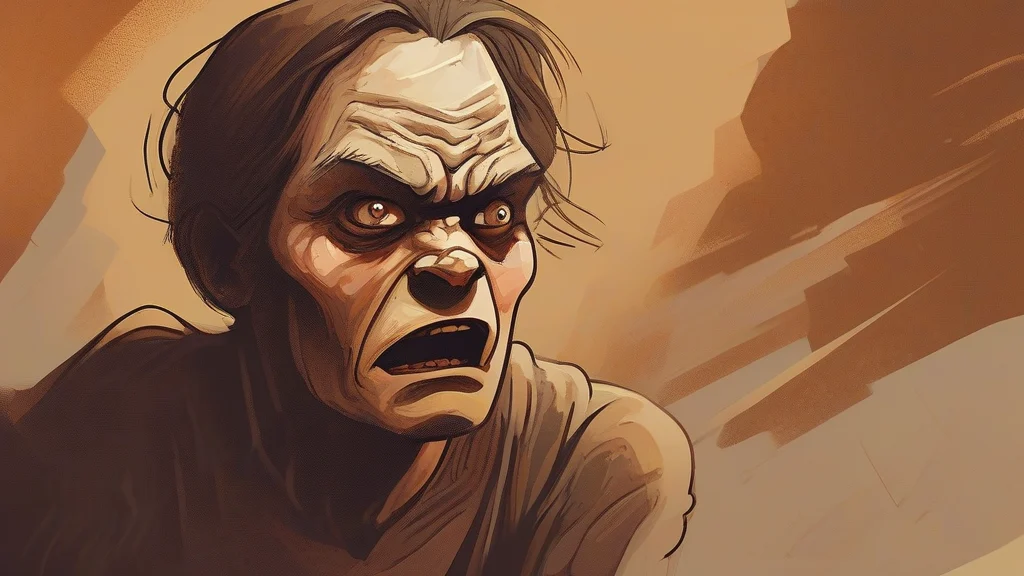
What does grimaced mean?
“Grimaced” is the past tense and past participle of “grimace,” a verb meaning to make a distorted facial expression, often in response to something unpleasant. The expression can indicate disgust, pain, fear, embarrassment, annoyance, or reluctant acceptance, with the surrounding context determining the precise emotion. “Grimaced” is especially useful in narrative writing because it communicates a reaction quickly and vividly without requiring an explicit statement of what someone feels. For example, a character may grimace at a strange smell, wince during an injury, or react to an unwelcome proposal. The word belongs to ordinary, neutral English and is widely used in British and American speech and writing. Together with the related noun “grimace,” it describes both the act of making the face and the expression produced by it.
verb (past tense and past participle)Made a facial expression expressing disgust, pain, displeasure, or embarrassment. In its past-tense and past-participle uses, “grimaced” describes the action of grimacing or the resulting expression.
- Made a facial expression showing disgust, pain, displeasure, or embarrassment.
"She grimaced at the smell of the old cheese and pushed the plate away."
"The child grimaced when the doctor approached with the syringe."
"He grimaced at the suggestion of postponing the meeting."
A single grimace can turn a silent scene into an entire exchange of alarm, disgust, or embarrassment.
Reviewed by Deb Chak, Editor. AI-assisted content curated by RJS Tech Solutions LLP.
Where does grimaced come from?
“Grimaced” was formed by adding the English past-tense and past-participle ending “-ed” to “grimace.” “Grimace” entered English in the early 17th century from French “grimaud,” an obsolete word for an ugly or contorted face. French “grimaud” developed from Old French “grimier,” ultimately connected with “grim,” a Germanic word associated with a stern or sullen appearance.
Related word forms
How grimaced is actually used
Neutral in register and common in both spoken and written English. It usually describes a brief, involuntary-looking facial movement and can convey a range of negative reactions, including disgust, discomfort, pain, or embarrassment.