
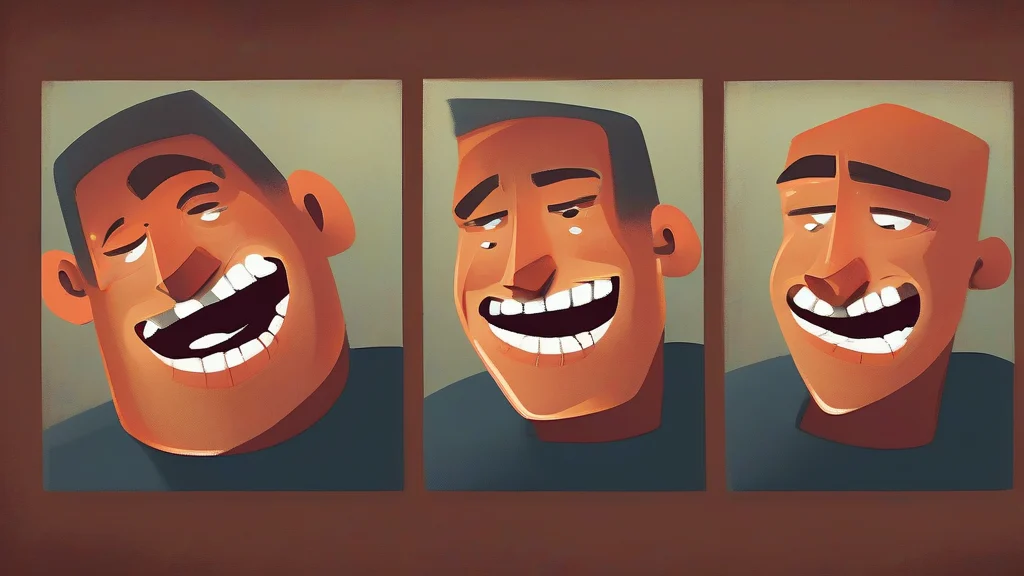
What does grinned mean?
Grinned is the past tense and past participle of grin. It describes the act of smiling broadly enough to show the teeth, often in response to amusement, pleasure, or a joke. In many contexts, a grin is warmer and more expressive than a simple smile, and it can carry a playful, mischievous, or slightly self-satisfied undertone. For example, someone may grin after hearing a clever remark or while sharing a secret with a friend. The word is common in everyday speech and informal writing, appearing in phrases such as “grin from ear to ear” and “grin and bear it.” Because a grin emphasizes the expression itself, it can also describe a forced or ironic smile, not only a genuinely happy one. Although “grinned” belongs to a small, familiar word family, it remains useful for showing the character of a smile in a memorable and vivid way.
verbGrinned is the past tense and past participle of grin, meaning to show the teeth in a broad smile. It can also describe a broad, sometimes mischievous or self-satisfied expression.
- To show the teeth in a broad, often cheerful or mischievous expression.
"He grinned and told her the joke."
"He grinned and told her the joke."
"By the time we reached the punchline, she was grinning so hard her eyes had disappeared."
A grin can look playful or mischievous, while a smile may be merely polite; the teeth are often what make the difference visible.
Reviewed by Deb Chak, Editor. AI-assisted content curated by RJS Tech Solutions LLP.
Where does grinned come from?
The word comes from Middle English grinning, which developed from Old English grennian, meaning “to bare the teeth” or “to show the teeth.” Its sense of a broad, usually amused smile developed from this older expression of displaying the teeth. English grin has relatives in other Germanic languages, including German grinzen and Dutch grijnzen, which similarly refer to grinning or showing the teeth.
Related word forms
How grinned is actually used
Informal and descriptive. Grinning usually conveys amusement, delight, or playful satisfaction, but it can also suggest embarrassment, self-satisfaction, or mischief.