
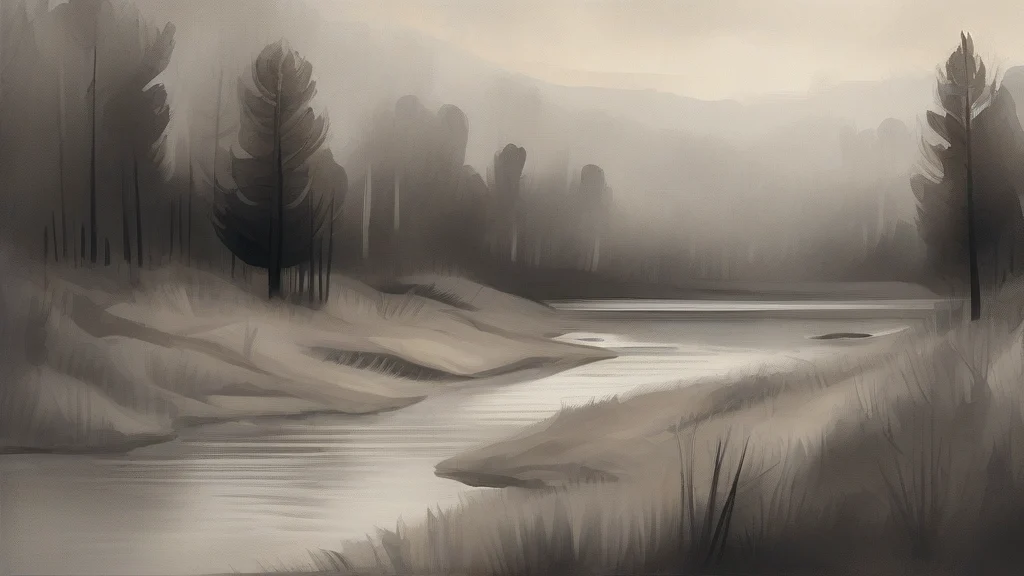
What does grisaille mean?
Grisaille is a technique or work of art made entirely with shades of gray and white. It was especially important in medieval, Renaissance, and Baroque religious painting, where artists often used it to depict figures that appeared to be carved in stone or painted directly onto architectural surfaces. The technique could also provide the underpainting for a later addition of color. More broadly, “in grisaille” means in monochrome, especially in gray tones rather than in a full range of colors. The word comes through French from gris, meaning “gray,” and retains an art-critical flavor rather than everyday use. It is especially useful when discussing how tonal modeling alone can suggest volume, texture, and sculptural presence without the distraction of color.
A painting, drawing, or decorative work executed entirely in shades of gray and white.
"A grisaille of the Virgin and Child hangs above the doorway."
The term is chiefly used in art history and may refer either to the technique or to a finished monochrome artwork.
Made or painted entirely in shades of gray and white.
"The cabinet doors bear grisaille scenes of birds and flowers."
Often used attributively before words such as painting, panel, or scene.
The plural is grammatically regular but uncommon because the word usually appears in the singular or in the fixed phrase “in grisaille.”
"Several grisailles from the sixteenth century were displayed at the exhibition."
A grisaille is a painting dressed in gray: before color ever arrives, its shadows and highlights create the illusion of carved stone or metal.
Reviewed by Deb Chak, Editor. AI-assisted content curated by RJS Tech Solutions LLP.
Where does grisaille come from?
The English word comes from French grisaille, formed from gris, “gray,” and the suffix -aille. Gris itself ultimately derives from Latin griseus, meaning “gray” or “grayish,” the source of related words such as gray and griseous. English borrowed the art term during the early modern period, when grisaille painting was widely practiced in Europe.
How grisaille is actually used
The word is primarily an art-historical term and is usually used with technical or descriptive precision. It is more common in British and American English than in general everyday speech.
Easily confused with grisaille
Grisaille denotes a monochrome artwork or technique, whereas gris is chiefly known as the French word for gray or as the surname of the literary character Boris Vian's character Boris.