
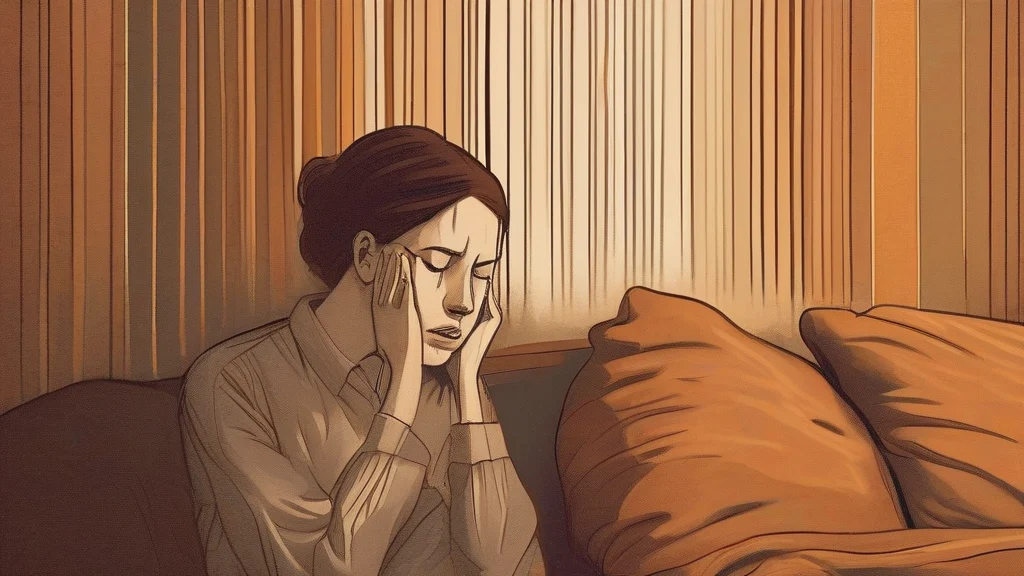
What does groaning mean?
Groaning is a form of the verb groan, meaning to make a low, strained vocal sound because of pain, distress, discomfort, or strong dissatisfaction. It can describe a person's physical suffering, as in someone groaning with pain, or a figurative protest, as when a community complains about an unfair decision. The word also applies to deep creaking or strained noises made by objects under pressure, such as a bridge groaning beneath heavy traffic. In these contexts, groaning suggests something difficult, uncomfortable, or close to breaking. The related noun refers to the act or sound of groaning and can be used metaphorically for collective hardship or complaint. The word is common in both British and American English and carries a vivid sensory quality, making it especially effective in descriptions of physical distress, emotional exhaustion, and structural strain.
To make a low, strained sound because of pain, distress, discomfort, or strong dissatisfaction; also, to emit a deep creaking or strained sound under pressure.
"The injured hiker was groaning as the rescuers approached."
The -ing form is used as a present participle, often with 'with' or 'under'; it can also function as a gerund before a noun, as in 'the groaning of the old timber frame.'
The act of groaning or a low, strained sound expressing pain, distress, complaint, or structural stress.
"There was a loud groaning from inside the overloaded barn."
The noun is often used attributively and figuratively, as in 'a groaning old bridge' or 'the groaning of the opposition.'
Usually treated as a mass noun; the plural 'groanings' is uncommon and chiefly occurs when separate instances of groaning are being referred to.
"The night was filled with the groanings of the injured animal."
A groan can express physical pain, emotional protest, or even the strain of an old building under pressure.
Reviewed by Deb Chak, Editor. AI-assisted content curated by RJS Tech Solutions LLP.
Where does groaning come from?
The word derives from groan, which comes from Middle English groon and Old English grōnian, meaning to make a low sound of pain or distress. The present-participle and gerund form groaning uses the productive English suffix -ing, which turns the verb into an ongoing action and, in noun use, names that action or its sound. The related form grone is an older variant of groan, while groaner denotes a person who groans.
Related word forms
How groaning is actually used
The participle is commonly used in constructions such as 'groaning with pain' and 'groaning under the pressure.' As a noun, groaning can refer either to the sound itself or, in figurative use, to widespread complaint or hardship.
Easily confused with groaning
Groaning usually suggests a deeper, more strained vocal sound associated with pain or distress, whereas moaning is often a sustained, louder expression of discomfort or dissatisfaction.