What does groundsel mean?
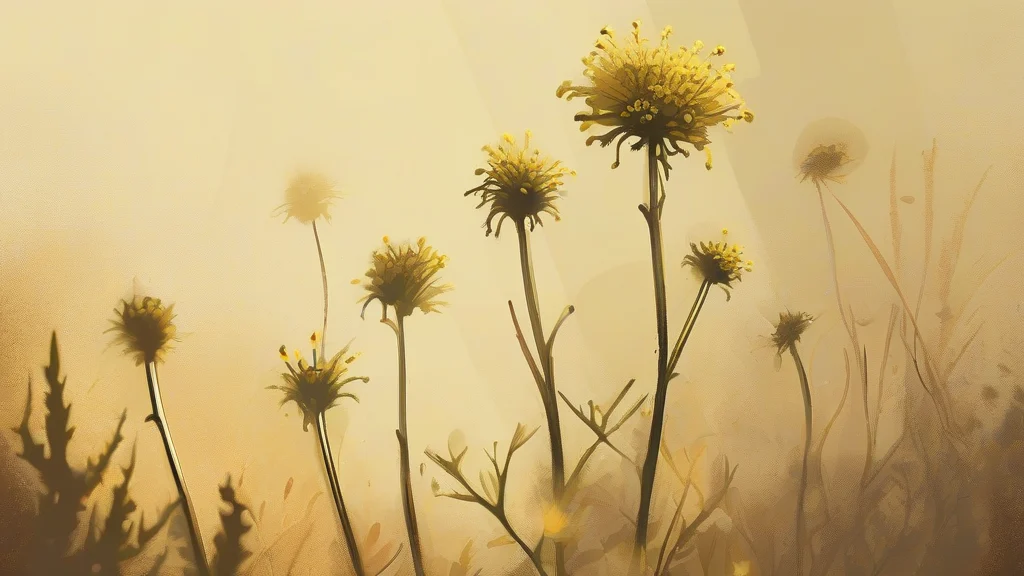
Groundsel is a perennial weed with small yellow flowers that grows in a variety of environments. It belongs to the daisy family and is known for its ability to thrive in poor soil conditions. The plant has been used in traditional medicine for its purported health benefits, although its effectiveness and safety are not universally accepted. Groundsel is often considered a nuisance by farmers, who struggle to eradicate it from their crops. Despite this, the plant remains a common sight in fields, meadows, and along roadsides, where its bright yellow flowers provide a splash of color.
nounGroundsel is a type of flowering plant, specifically a weed, that belongs to the daisy family. It is known for its small yellow flowers and ability to grow in a variety of environments.
- A type of flowering weed.
- A plant with medicinal properties.
"The field was overrun with groundsel, its bright yellow flowers a stark contrast to the dull brown earth."
"The farmer struggled to eradicate the groundsel from his crops."
"The herbalist used groundsel to create a remedy for skin irritations."
The plural form is used when referring to multiple plants or instances of groundsel.
"The farmer struggled to eradicate the groundsels from his crops."
Reviewed by Deb Chak, Editor. AI-assisted content curated by RJS Tech Solutions LLP.
Etymology of groundsel
The word 'groundsel' has its roots in Old English and Germanic languages. It is derived from the words 'grund' meaning 'ground' and 'sell' or 'selle', which refers to a type of plant. The term has been used in English since the 14th century to describe this particular type of flowering weed.
How groundsel is actually used
Groundsel is often considered a weed and is typically found in fields, meadows, and along roadsides. It has been used in traditional medicine for various purposes.