
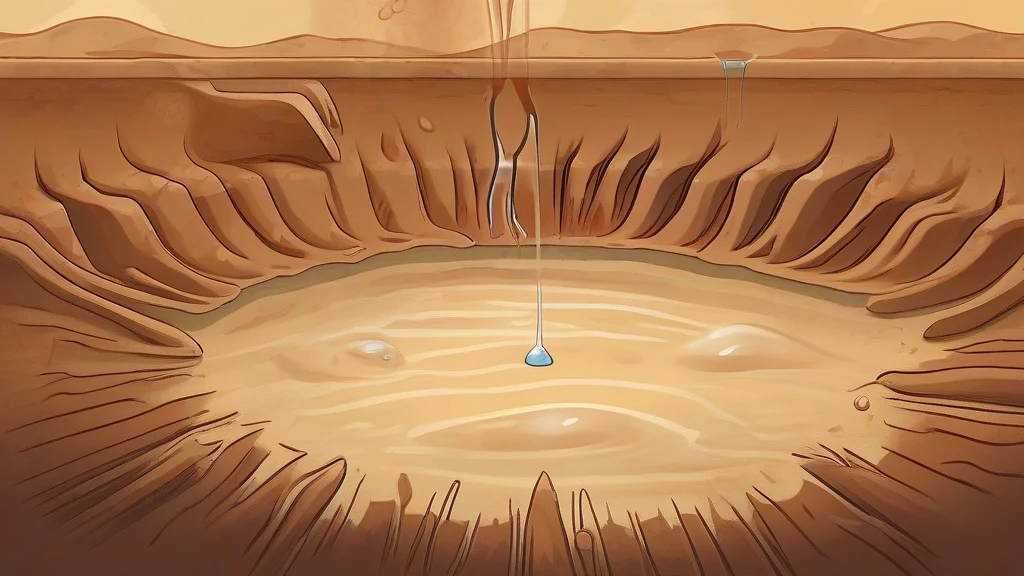
What does groundwater mean?
Groundwater is water that exists below the Earth's surface, moving through and occupying the spaces between particles of soil, sediment, and permeable rock. It is an essential part of the water cycle and a major source of fresh water for drinking, farming, industry, and natural springs. Groundwater is replenished when precipitation infiltrates the soil, although recharge may take place slowly and unevenly. The water can be drawn up through wells, emerge naturally as springs, and contribute to the flow of rivers. Because it moves through underground materials, groundwater can carry dissolved minerals and pollutants, making contamination an important environmental concern. The word is especially common in hydrology, geology, environmental science, agriculture, and public discussion of water resources. In general use, it refers to underground water broadly rather than to a single spring, well, or aquifer.
nounWater found beneath the Earth's surface in soil, sediment, and permeable rock. It is an important source of drinking water, irrigation, and natural springs.
- Water beneath the Earth's surface, especially water stored in soil, sediment, and permeable rock.
"The village's wells draw clear groundwater from beneath the surrounding fields."
"Heavy rain can cause groundwater to rise and flood low-lying parts of a town."
"The environmental report noted that industrial chemicals had contaminated the groundwater beneath the site."
Groundwater is normally used as a mass noun. The plural is uncommon but can refer to distinct groundwater systems or sources.
"Groundwaters in coastal and inland regions face different pressures."
Groundwater is the hidden reservoir that feeds wells, springs, and many rivers.
Reviewed by Deb Chak, Editor. AI-assisted content curated by RJS Tech Solutions LLP.
Where does groundwater come from?
The word is an English compound formed from ground and water. Ground comes from Old English grūne, meaning soil, land, or the surface of the earth, while water comes from Old English wæter. The combination groundwater has been used in English since the early 19th century as a descriptive term for water occurring below the ground. Its related forms, including underground, groundless, waterless, and watery, reflect the long-standing vocabulary of English words grounded in these two Germanic elements.
How groundwater is actually used
The term is used in scientific, environmental, agricultural, and public-policy contexts. It is usually a mass noun, though the plural can distinguish separate groundwater systems.
Easily confused with groundwater
Surface water remains above the ground, such as rivers, lakes, and ponds, whereas groundwater is held below the surface in soil and rock.
The water table is the upper boundary of the saturated zone below which pores in the ground are filled with water; it is not itself the water.