
What does halberd mean?
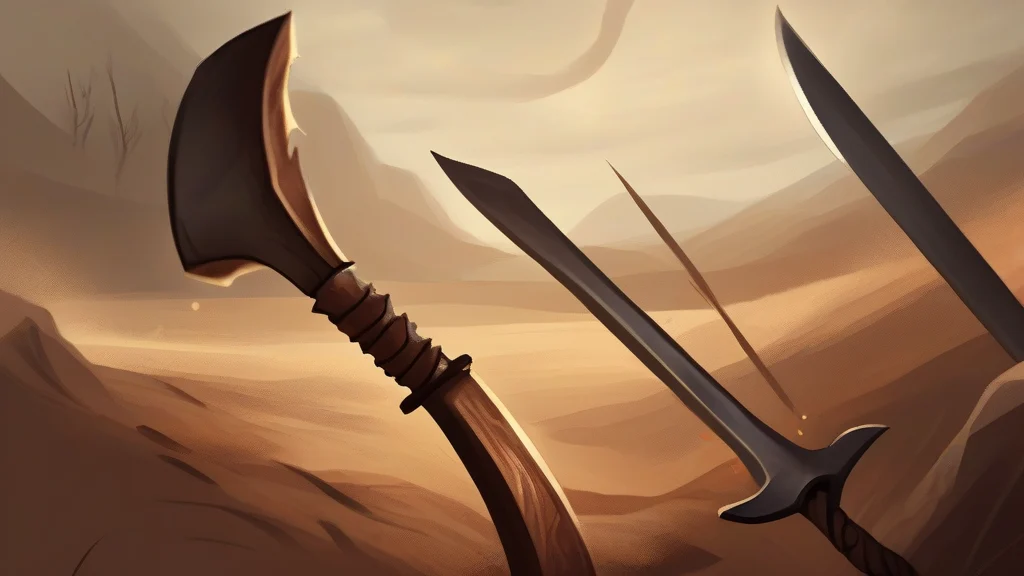
A halberd is a long-handled weapon that combined several kinds of battlefield tools: an axe blade for cutting, a spear point for thrusting, and often a hook or rear spike. It was carried by infantry soldiers in the medieval and early modern periods, especially in Europe, and could be used to strike, hook, or thrust an opponent. The weapon is therefore more specific than a general axe or spear and should not be confused with a partisan, which was generally a spear-like polearm. Today, halberd is chiefly historical, literary, or ceremonial, often appearing in accounts of battles, guards, and military pageantry. The rare verb means to attack or wound someone with a halberd. The word is especially memorable because it names a weapon designed to offer several methods of attack in a single implement.
A historical polearm with an axe blade on one side and a spear point on the other, often with a hook or spike at the rear.
"The guard carried a halberd while standing beside the palace gate."
Chiefly historical, literary, or ceremonial in modern usage.
To attack, wound, or kill someone with a halberd.
"The old chronicler claimed that the soldier halberded the intruder at the gate."
Rare and strongly literary or archaic.
The standard plural adds -s; the historical plural halberdes also appears in older texts but is not standard today.
"The guards carried halberds as they marched through the courtyard."
A halberd was the medieval battlefield’s multitool: spear, axe, and hook packed into one pole.
Reviewed by Deb Chak, Editor. AI-assisted content curated by RJS Tech Solutions LLP.
Where does halberd come from?
The English word entered Middle English in the fifteenth century from Middle French hallebarde, with related spellings developing over time. The French word comes from an Old Frankish or Germanic origin, although the precise development of its elements has been debated. Related forms in French, Spanish, and Italian preserve the same general weapon name and lineage.
Related word forms
How halberd is actually used
The noun is mainly historical, literary, or descriptive of historical warfare. The verb is much rarer and has a strongly archaic or literary register. In heraldic and military contexts, the word can also evoke ceremonial guards and traditional soldiers’ equipment.
Easily confused with halberd
A partisan is primarily a long spear with a broad blade, whereas a halberd combines a spear point with an axe-shaped blade and often a rear hook.