
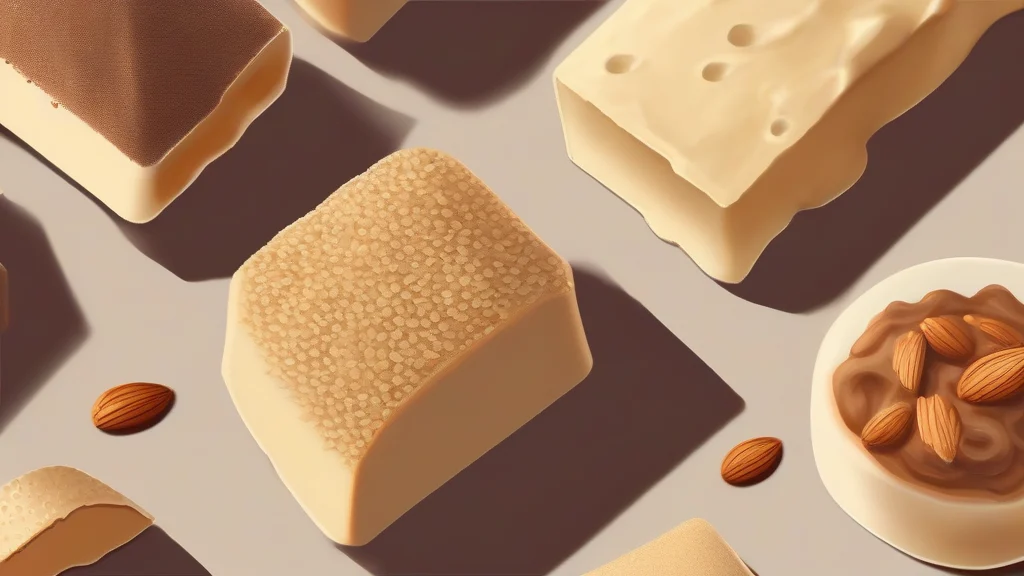
What does halva mean?
Halva is a term for a broad family of dense, sweet confections found especially in Middle Eastern, South Asian, Turkish, and Central Asian cuisines. Many versions are made by cooking sugar syrup with milk or cream, then adding ingredients such as pistachios, almonds, coconut, sesame, or cardamom. Other regional recipes use semolina or other flours, producing a more grainy texture, while still others are firmer and can be cut into pieces. In English, halva commonly refers to a creamy, cardamom-scented confection served with coffee or tea, but its name covers a wider range of related sweets. The word is also reflected in forms such as halwa, halvah, and Turkish helva. Its usefulness lies partly in this culinary breadth: halva is not one single standardized recipe, but a shared label for traditions of intensely sweet treats made from sugar, dairy, nuts, grains, and aromatic spices.
nounA dense, sweet confection made from cooked sugar syrup, usually with milk or cream and flavorings such as nuts, coconut, sesame, or cardamom. Recipes and textures vary considerably by region, with some versions made with semolina or other flours.
- A dense Middle Eastern or South Asian sweet confection, commonly flavored with cardamom and nuts and made from caramelized sugar with milk or cream.
- A regional sweet confection made with semolina, wheat flour, or another starch, with recipes and textures varying by country.
"She served cardamom halva alongside strong coffee after dinner."
"The bakery sells halva flavored with pistachios and rosewater."
"In the South Asian sweet shop, the halva was cut into firm, jewel-like pieces."
The regular English plural is halvas, although the word is often used in a mass sense when referring to a quantity of the confection.
"The shop displayed trays of halvas in different flavors."
Halva’s name is a linguistic passport: Arabic ḥalwā, Persian halva, and Turkish helva all point to the same broad tradition of sweet confections.
Reviewed by Deb Chak, Editor. AI-assisted content curated by RJS Tech Solutions LLP.
Where does halva come from?
The English word comes through Arabic ḥalwā, meaning “sweets” or “confectionery,” with cognate forms Persian halva and Turkish helva. These forms belong to a shared Middle Eastern and South Asian vocabulary for sweet foods and confections. Over time, the name came to be applied to particular dense sweets made with sugar, milk, nuts, and aromatics.
How halva is actually used
In English, halva is an international culinary term rather than a narrowly regional one. It may refer to substantially different preparations depending on the cuisine, so context often determines whether the sweet is creamy, grainy, soft, or firm.
Easily confused with halva
Halvah is an alternative spelling of halva and does not denote a different food.