
What does hammer mean?
A hammer is a tool with a heavy head and a handle, used to drive nails, break objects, or shape materials by striking them. As a verb, “to hammer” means to strike something repeatedly and forcefully; it can also describe persistent criticism, questioning, or difficult work. The literal sense is highly familiar because hammering is one of the most basic actions in carpentry, construction, metalworking, and many traditional crafts. Figurative uses often carry an image of relentless force: a lawyer may hammer a witness with questions, a journalist may hammer a politician for an answer, or a team may hammer away at a difficult opponent. The word is common in British and American English, with only minor differences in pronunciation. Its long history and wide range of practical and figurative uses make it an unusually versatile everyday word.
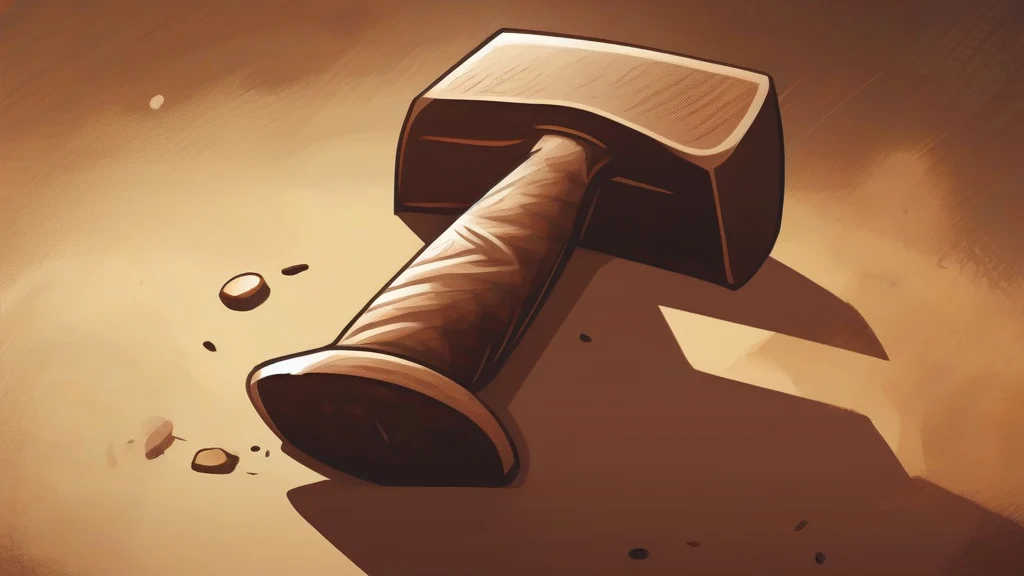
A hand tool with a heavy striking head mounted on a handle, used to drive nails, break objects, or shape materials.
"He reached for a hammer and began to repair the wooden frame."
The word can also refer to a powered machine or a component that delivers pounding blows.
To strike something repeatedly and forcefully, especially with a hammer; figuratively, to attack, criticize, question, or work at something persistently.
"The workers hammered the metal into a thin sheet."
Literal uses emphasize repeated forceful blows. Figurative uses often suggest persistence, pressure, or relentless questioning.
The plural is used when referring to more than one hammer or when the noun is used in the abstract, as in “the tools of the trade include hammers.”
"The workshop was lined with hammers and other hand tools."
From Old English hamor to the modern hammer, this tool has kept essentially the same name for more than a thousand years.
Reviewed by Deb Chak, Editor. AI-assisted content curated by RJS Tech Solutions LLP.
Where does hammer come from?
The English word comes from Old English hamor, an inherited Germanic word for a hammer. It ultimately relates to Proto-Germanic *hamaz and to cognates including Dutch hamer, Old Norse hamarr, and German Hammer. These related forms have long referred to the striking tool, while English later extended the word into figurative expressions involving repeated force or persistent pressure.
Related word forms
How hammer is actually used
As a verb, hammer usually suggests repeated, forceful blows or persistent pressure. It can be informal when used figuratively, as in “hammering someone with questions,” while “hammer out” can mean producing something through persistent discussion and effort.