
What does hare mean?
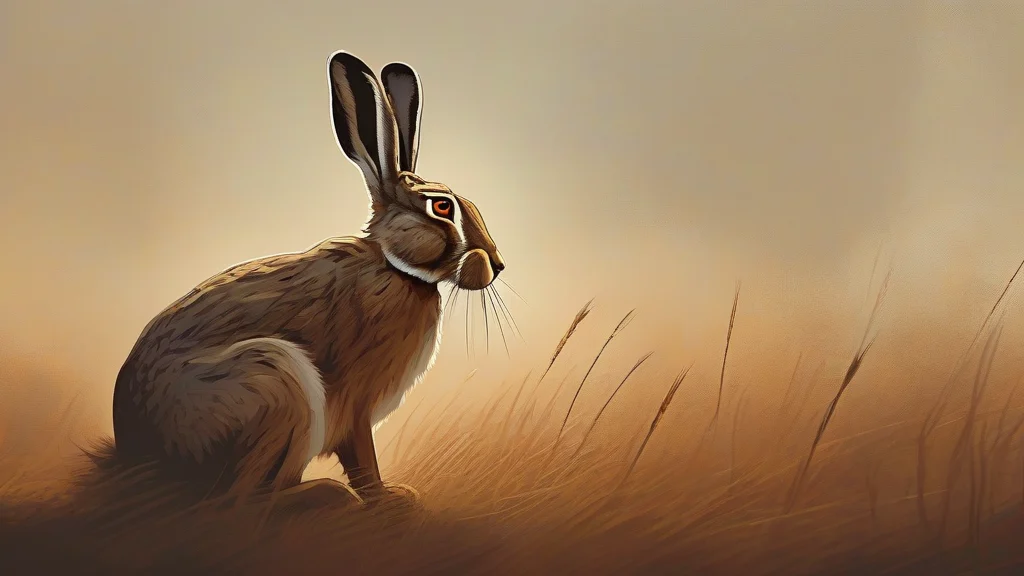
A hare is a swift, long-eared mammal belonging to the rabbit family, but it is generally leaner and more strongly built than a rabbit. Its powerful hind legs, long ears, and short tail are adapted to running across open country rather than living chiefly in burrows. Hares occur throughout Europe, Asia, and North America, with species such as the brown hare and mountain hare familiar in Britain and the snowshoe hare familiar in North America. In ordinary usage, the word refers to the animal; more rarely, the related verb means to run or move very quickly. The hare also has a prominent place in folklore and literature, especially through the story of the hare and the tortoise, in which speed alone does not guarantee victory. Although people sometimes use hare and rabbit interchangeably, the distinction is useful: hares are generally faster, more long-legged, and less burrow-dependent, while rabbits tend to be smaller and more closely associated with underground shelters.
A swift, long-eared mammal of the rabbit family, typically with a slender body, long hind legs, and a short tail.
"A hare sheltered beneath the roots of an old tree."
To run or move with great speed.
"The fox hares across the field after the startled pheasant."
The standard plural of the noun hare is hares.
"Several hares grazed in the open field."
The hare's famous race with the tortoise turned its speed into a timeless cultural symbol.
Reviewed by Deb Chak, Editor. AI-assisted content curated by RJS Tech Solutions LLP.
Where does hare come from?
The English noun comes from Old English hara, a Germanic word for the animal, and the modern form developed through Middle English. It is cognate with related words in other Germanic languages, including Old Norse hári, Dutch haas, and German Hase. The rare verb meaning to run or move swiftly is an extension of the noun's association with the hare's speed.
How hare is actually used
In modern standard English, hare is primarily a noun. The verb is relatively uncommon and sounds literary or regional, often suggesting rapid movement or flight.
Easily confused with hare
A hare generally has longer ears and hind legs, a slimmer body, and is more adapted to running in the open, whereas rabbits are typically smaller and more accustomed to living in burrows.