
What does harlequin mean?
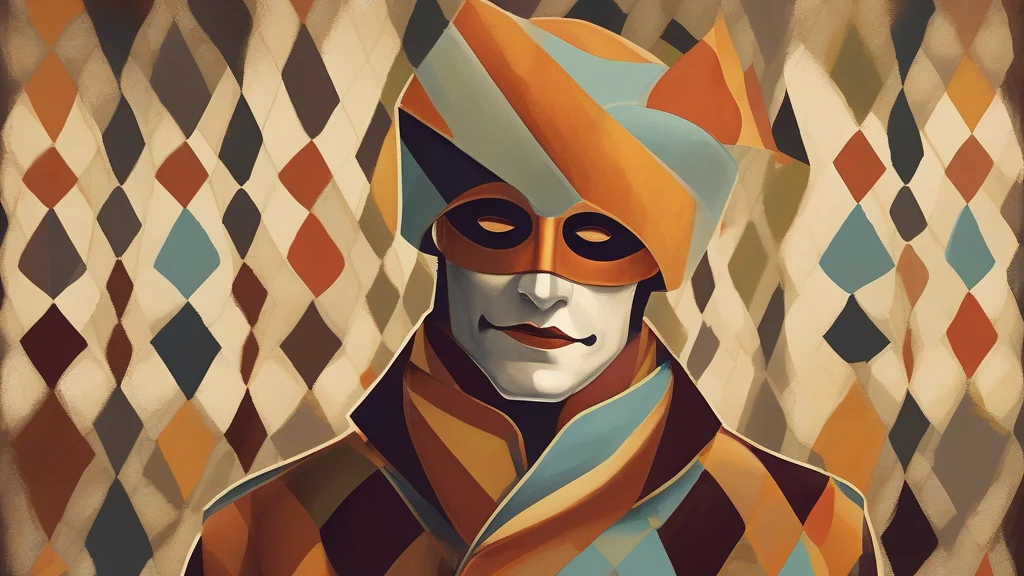
Harlequin is an English word with both decorative and theatrical meanings. Its best-known modern use is for a bold pattern composed of irregular or diamond-shaped patches in contrasting colours; fabrics, ceramics, costumes, masks, and interiors may all be described as harlequin. The word also names a traditional comic character descended from the Italian commedia dell’arte figure of Arlecchino. Such characters were known for their colourful costumes, agile performances, and often mischievous or foolish behaviour. Today, the noun is used for either the pattern itself, an object displaying it, the historical stage character, and certain vividly coloured animals whose common names include “harlequin.” As an adjective, harlequin means variegated, multicoloured, or conspicuously patterned in this manner. The word carries associations with theatricality, eccentricity, flamboyance, and exuberant colour, making it especially useful when describing designs that are deliberately bright and visually busy.
A multicoloured pattern of irregular or diamond-shaped patches; an object bearing such a pattern; a traditional comic or pantomime character; or a fish whose common name includes harlequin.
"The jug was decorated with a green and yellow harlequin."
The theatrical sense is often capitalized when referring specifically to the commedia dell’arte or pantomime character.
Having or resembling a harlequin pattern; variegated in brightly contrasting colours.
"The dancers wore harlequin trousers covered in vivid geometric shapes."
The adjective is principally used for patterns, clothing, decoration, and other conspicuously multicoloured designs.
The plural is used for multiple harlequin patterns, decorated objects, or theatrical characters.
"Several painted harlequins covered the walls of the nursery."
A Harlequin began as a theatrical trickster and left behind one of fashion’s loudest colour schemes.
Reviewed by Deb Chak, Editor. AI-assisted content curated by RJS Tech Solutions LLP.
Where does harlequin come from?
The English word entered use in the early 17th century through French Harlequin, which was borrowed from Italian Arlecchino, the name of a stock character in commedia dell’arte. The ultimate origin of that name is uncertain. Related forms include French arlequin, Italian arlecchino, German Harlekin, and Dutch harlekijn, all reflecting the same theatrical figure and its colourful costumes.
Related word forms
How harlequin is actually used
In modern design and fashion contexts, “harlequin” usually refers to a bold, multicoloured pattern or to something bearing one. References to the theatrical stock character commonly capitalize the name as “Harlequin.”
Easily confused with harlequin
Arlequin is a French-derived form and name especially associated with the commedia dell’arte character, while harlequin is the standard English spelling and also names the multicoloured decorative pattern.