
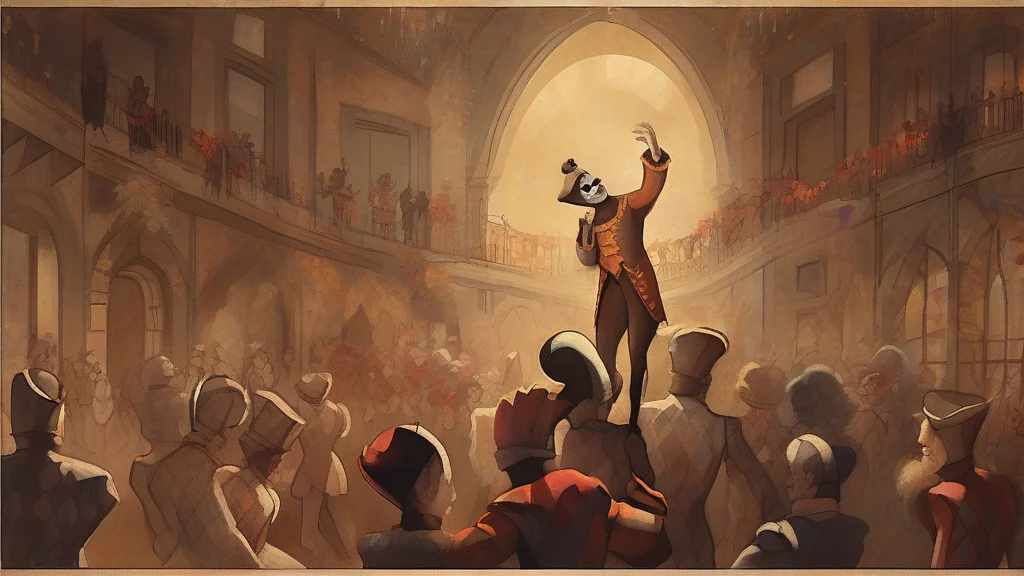
What does harlequinade mean?
A harlequinade is a comic theatrical entertainment, particularly the form of masked pantomime or masque that flourished in eighteenth-century Britain and gave Harlequin a central role. Such performances commonly combined exaggerated characters, acrobatics, songs, visual jokes, and rapid magical transformations. The word has also acquired a figurative meaning for a confused or incongruous mixture of things, as in a programme described as a harlequinade of unrelated styles and genres. Today the term is much more likely to be encountered in literary, theatrical, or historical writing than in everyday speech. It is especially useful when discussing early British stage traditions because it identifies a more specific theatrical form than the general word pantomime, while also suggesting a mixture that is lively, unpredictable, and deliberately disorderly.
A comic pantomime or masque, especially a historical entertainment in which Harlequin is the principal character and the action includes acrobatics and magical transformations.
"The troupe performed a lively harlequinade before an enthusiastic audience."
Chiefly historical or literary in this sense.
A confused, incongruous, or disorderly mixture of things.
"The final act was an inventive harlequinade of music, dance, and recited poetry."
A literary and comparatively uncommon figurative use.
The regular plural refers to individual comic entertainments or to confused mixtures of this kind.
"The company staged several harlequinades during the festival."
A harlequinade was a riot of masks, acrobatics, and instant transformations—part stage show, part visual joke.
Reviewed by Deb Chak, Editor. AI-assisted content curated by RJS Tech Solutions LLP.
Where does harlequinade come from?
The word was formed in English from Harlequin, the name of a traditional comic character, with the suffix -ade. Harlequin itself comes ultimately from Italian Arlecchino, whose name became associated with a masked clown or trickster figure in European popular theatre. The combination Harlequin + -ade developed the sense of a comic performance centered on that character.
How harlequinade is actually used
The theatrical sense is chiefly historical and literary, referring especially to eighteenth-century British entertainment. The figurative sense is literary and comparatively uncommon.
Easily confused with harlequinade
A harlequin is the stock comic or masked character, especially in early European pantomime, whereas a harlequinade is an entertainment built around such a character and its adventures.
Pantomime is the broader theatrical form, while a harlequinade is the specific comic genre that traditionally gives Harlequin a central role.