
What does haycock mean?
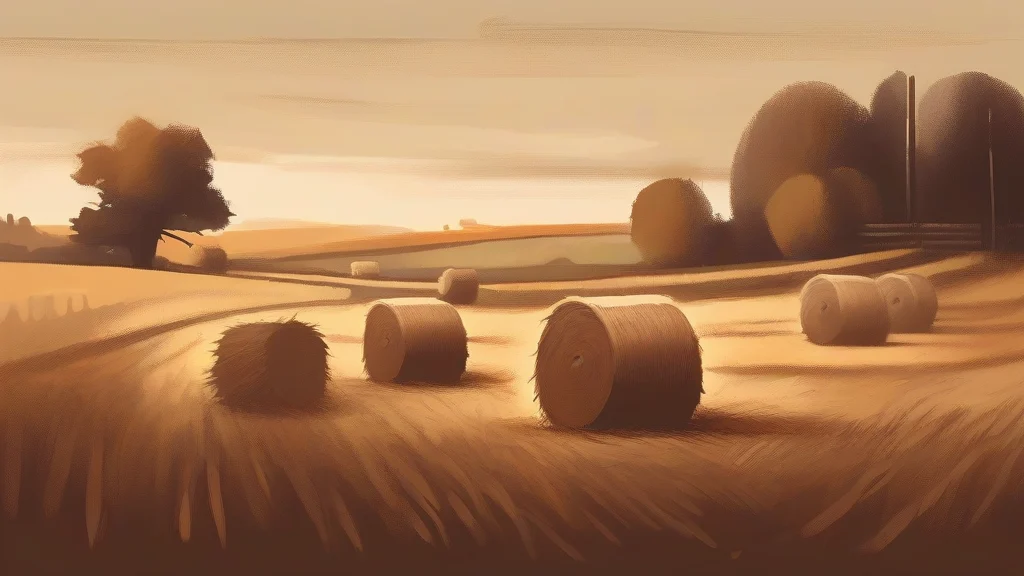
Haycock is a noun for a small, compact stack of hay, especially one built into a rounded or conical shape. The word belongs mainly to rural, traditional British English, though it is also found in American dictionaries and in descriptions of historic harvesting. A farmer might leave several haycocks in a field to dry, or workers might build them into a row after cutting and gathering the hay. The term is more specific than haystack: a haystack can be large and can refer to a substantial store of hay, whereas a haycock is typically a modest pile. In literature and local-history writing, haycocks can also help evoke a traditional agricultural landscape. The word is uncommon in ordinary modern conversation but useful when precision matters or when an older countryside idiom is being sought. Its unusual form can initially suggest a bird, yet the second element refers to a heap or pile, not a rooster.
nounA small, compact stack of hay, especially one built in a rounded or conical shape.
- A small, compact stack of hay, especially one shaped like a cone.
"The farmer left a row of haycocks drying in the field."
"The farmer left a row of haycocks drying in the field."
"Descriptions of the harvest often mention the haycocks standing beside the barn."
The standard plural adds “-s.”
"The workers arranged the haycocks in neat rows beside the barn."
Although it sounds as though it should involve a chicken, the “cock” in haycock means a heap or pile, not a rooster.
Reviewed by Deb Chak, Editor. AI-assisted content curated by RJS Tech Solutions LLP.
Etymology of haycock
Haycock is an English compound formed from hay and cock. In this compound, cock denotes a heap or pile, and the compound is attested from the early 17th century. Its sense is therefore agricultural and literal: it names a small, shaped stack of dried grass, rather than anything connected with a rooster.
Related word forms
How haycock is actually used
This is mainly a rural, traditional, and literary term rather than common modern usage. It is more specific than “haystack,” since it usually denotes a relatively small or neatly shaped stack.