
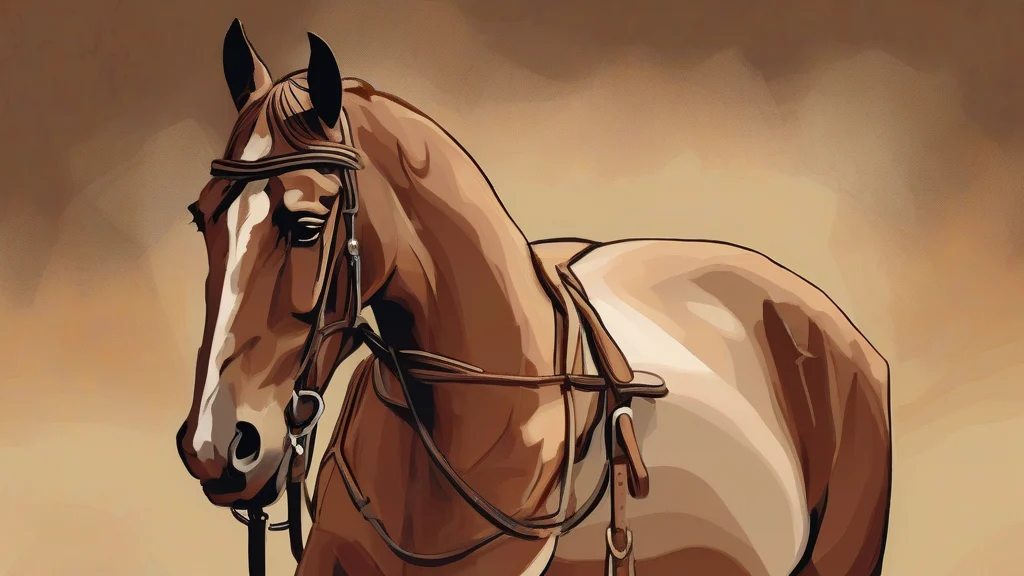
What does headstall mean?
A headstall is the portion of a bridle that fits around a horse's head and keeps the bridle correctly positioned. In modern equestrian language, it includes the cheekpieces and the straps passing around or behind the head; it is therefore more specific than the bridle as a whole. The word can also be used more broadly, though rarely, for a band or covering worn on the head, a sense that reflects the term's older history and appears chiefly in historical or costume contexts. Riders, grooms, and tack makers use headstall as straightforward technical vocabulary, not as an ornate or archaic expression. When selecting or adjusting tack, the distinction is practical: the headstall surrounds the animal's head, while the bit, reins, and other components belong to the wider bridle system. Because the word precisely names a functional part of horse equipment, it is useful in stable, veterinary, and equestrian writing as well as in descriptions of animal care and handling.
nounA headstall is the part of a bridle that fits around a horse's head and holds the bridle in position. In older usage, it can also mean a band, covering, or other piece of headgear.
- The portion of a bridle that fits around a horse's head and holds it in position.
- An older or less common term for a band, covering, or piece of headgear worn on the head.
"The groom checked the headstall's buckles before saddling the mare."
"The groom checked the headstall's buckles before saddling the mare."
"Dictionary entries often record headstall as an older term for a headband or other covering."
The regular plural is used when referring to multiple headstalls or different examples of this piece of tack.
"The tack shop displayed headstalls for several different breeds and sizes of horses."
A horse's bridle may include a bit and reins, but it is the headstall that actually cups and surrounds the head.
Reviewed by Deb Chak, Editor. AI-assisted content curated by RJS Tech Solutions LLP.
Where does headstall come from?
The word is a native English compound built on Old English heafod, meaning “head” and the ancestor of modern head, together with an older form of stall used in compounds for fittings or frames. The compound continued through Middle English into modern headstall, with its established sense referring to the head-fitting portion of a bridle. Modern compounds such as headband, headpiece, and headgear preserve the same productive English pattern of naming head fittings by their head component.
How headstall is actually used
In modern equestrian use, the term is technical but ordinary among riders, grooms, and tack workers. Its broader meaning for a band or covering worn on the head is uncommon and chiefly historical or associated with costume.
Easily confused with headstall
A bridle is the complete assembly of headgear, bit, and reins, whereas a headstall is specifically the portion surrounding the horse's head.
A halter is a relatively simple headgear used chiefly for leading or controlling an animal, while a headstall generally forms the head-fitting part of a bridle.