
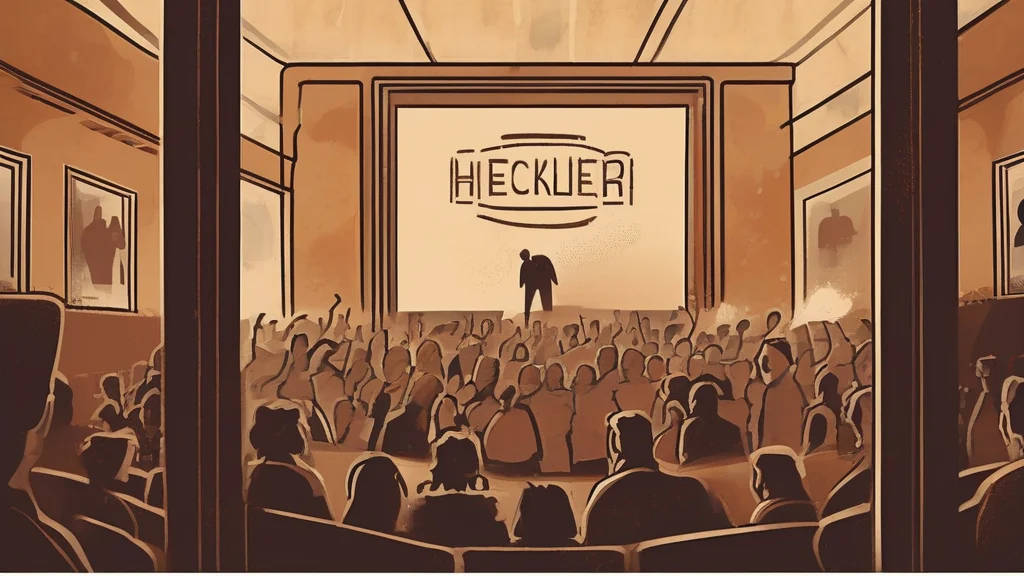
What does heckler mean?
A heckler is someone who interrupts a speaker, performer, or public event with mocking, teasing, or deliberately disruptive comments. The word is particularly associated with audiences: a comedian may be heckled by people who call out jokes, criticize the performance, or shout rude remarks. It can also describe anyone who persistently obstructs a meeting, lecture, or rally through noisy interruptions. The expression is informal and often carries a humorous or mildly disapproving tone, while still conveying that the person's behavior is disruptive. In sports reporting, a heckler may be a spectator who protests a decision, but the core meaning is someone who challenges or disrupts a public performance through vocal interruption. “Heckler” comes from the verb “heckle,” so the noun names the person who performs that behavior.
nounA person who interrupts a speaker, performer, or public event with mocking, derisive, or disruptive comments. The term is especially associated with audience members who heckle performers.
- A person who interrupts a speaker or performer with derisive or disruptive comments, especially from an audience.
"A heckler shouted rude remarks throughout the lecture, making it difficult for the speaker to continue."
"Security removed a heckler who kept calling insults at the comedian."
"The rally was disrupted when a heckler began shouting from the back of the hall."
The standard plural refers to multiple people who interrupt or disrupt a public event.
"Several hecklers were escorted out of the theater."
From the theater to the sports field, one heckler can turn a shared public event into an intensely personal confrontation.
Reviewed by Deb Chak, Editor. AI-assisted content curated by RJS Tech Solutions LLP.
Where does heckler come from?
Heckler is an English agent-noun formed from heckle plus the suffix -er, meaning “one who heckles.” Heckle has older senses associated with combing or teasing material, while its familiar theatrical sense—interrupting a performer with derisive comments—was established during the nineteenth century. The word belongs to an English word family rather than being a direct borrowing from a foreign language.
Related word forms
How heckler is actually used
The term is generally informal and often mildly critical or humorous, though it can be strongly condemnatory when referring to deliberately abusive disruption. It is used in British and American English and is especially common in descriptions of performances and public events.
Easily confused with heckler
A heckler is the person who mocks or disrupts someone, while heckle is the verb describing that behavior.