
What does heckling mean?
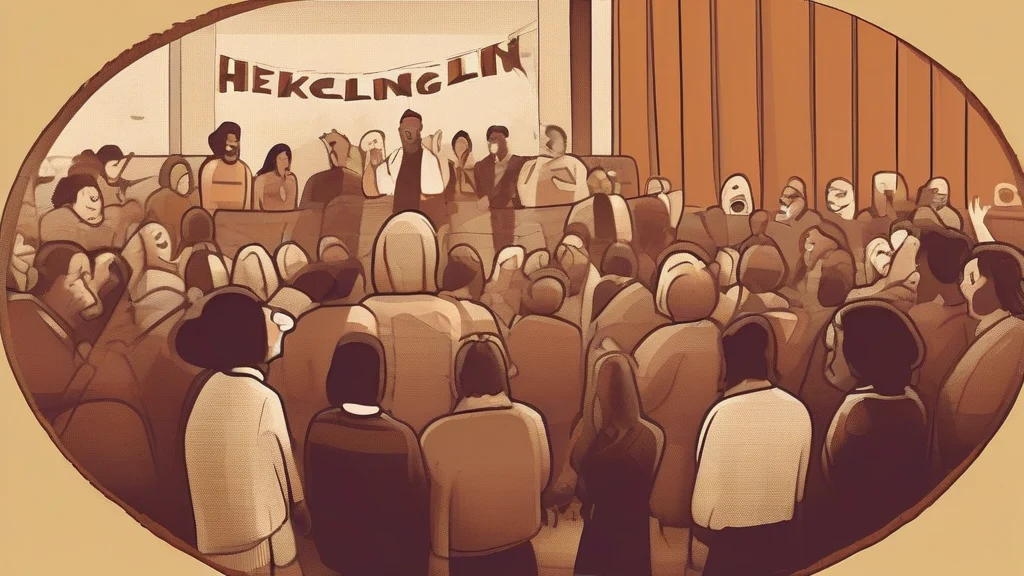
Heckling is the noisy, hostile criticism aimed at a performer, speaker, politician, or other public figure. It commonly involves shouted interruptions, laughter, insults, and booing directed at the target, especially by an audience. The word is chiefly associated with British and Irish English, though the related verb “heckle” is also used in American English. As a verb, “to heckle” means to subject someone to this treatment; as a noun, “heckling” names the collective activity itself. The term carries a strongly negative, confrontational connotation and usually implies public humiliation rather than polite disagreement. Even when the criticism has a legitimate target, the word focuses on the abrasive manner of the attack. Heckling is therefore useful in reporting on performances, rallies, debates, and celebrity appearances, where it identifies a recognizable form of audience participation. Its unusual history also makes it memorable: the word ultimately relates to a comb used for processing flax before developing its present theatrical and political senses.
The collective act of shouting derisive or hostile comments at someone, especially a performer or public speaker.
"The audience's heckling forced the performer to abandon the second act."
Usually treated as an uncountable collective noun.
To subject someone to shouted interruptions, mockery, or hostile criticism.
"Several audience members heckled the speaker throughout his argument."
Usually used in the active voice, either transitively or with an implied audience as the subject.
Heckling is normally used as an uncountable collective noun.
"The candidate was subjected to relentless heckling outside the hall."
Heckling began with a flax-comb: an everyday tool for teasing apart fibers became a word for verbally taking someone apart.
Reviewed by Deb Chak, Editor. AI-assisted content curated by RJS Tech Solutions LLP.
Where does heckling come from?
Heckling derives from the verb “heckle,” which originally referred to combing or dressing flax with a specialized tool called a heckle. During the early modern period, the verb acquired the figurative sense of subjecting someone to sharp questioning or hostile criticism. The gerund “heckling” subsequently developed as a noun for the collective activity of vocal ridicule. The German “Hechel,” meaning a flax comb, is a cognate of the same Germanic root.
How heckling is actually used
Informal and strongly confrontational. It may describe serious sustained ridicule or a more noisy, good-natured interruption, depending on context.
Easily confused with heckling
Heckle is the base verb, while heckling is its gerund and, when used as a noun, the collective activity of deriding someone.