
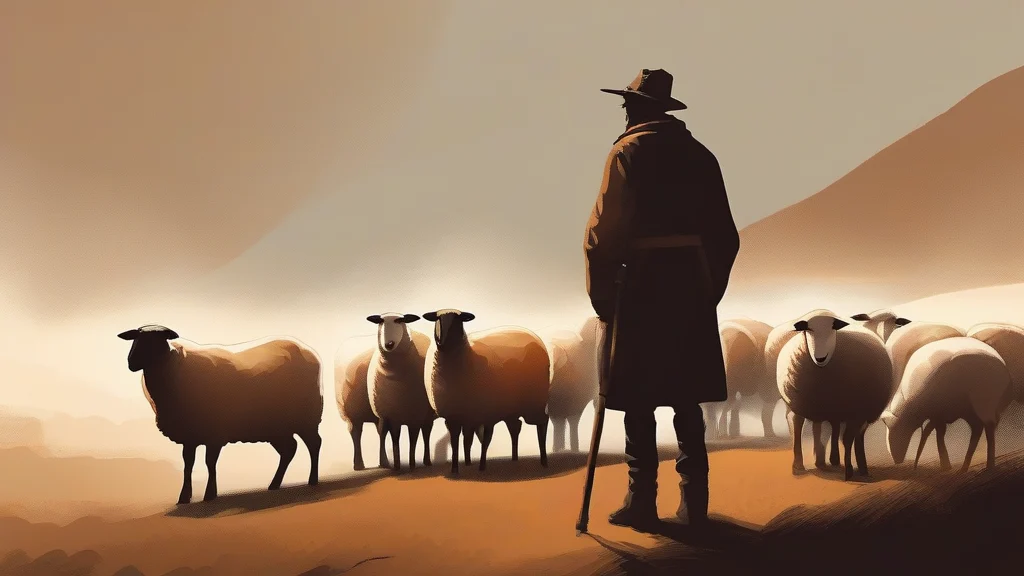
What does herder mean?
Herder is a common English noun for a person who tends, gathers, or moves livestock such as cattle, sheep, or goats. The role involves keeping animals together, guiding them between grazing areas, and watching over their safety, so the word often carries a practical, traditional, and outdoors-oriented association. In North American contexts, related terms such as rancher, stockman, and cowboy may be more familiar, while British and other English-speaking communities also use “herder” in livestock and rural settings. More broadly, “herder” can describe someone who guides a group or keeps people or animals moving in an organized way, though its primary modern sense concerns livestock. The word is useful because it names the worker rather than emphasizing ownership of the animals, a distinction that can matter when comparing herders, shepherds, stockmen, and ranchers.
nounA herder is a person who herds or tends livestock, such as cattle, sheep, or goats, keeping the animals together and often moving them between grazing areas. In broader use, the term can refer to anyone who guides or manages a moving group.
- A person who herds, tends, or manages livestock, especially cattle, sheep, or goats.
"The cattle herder guided the herd across the open range before dusk."
"An experienced herder can calm a restless flock with little noise."
"The young herder was responsible for moving the sheep to the summer pasture."
The standard plural of “herder” is “herders.”
"The herders worked together to move the livestock to the lower fields."
A herder is the human GPS of a moving flock, keeping the animals together and the day on course.
Reviewed by Deb Chak, Editor. AI-assisted content curated by RJS Tech Solutions LLP.
Where does herder come from?
“Herder” is an English formation in the “herd” plus “-er” pattern, with “-er” indicating a person who performs an action. “Herd” comes from Old English “heord,” meaning a group of animals kept together, and ultimately from a Germanic root also reflected in cognates such as German “Herde.” The related English words “herdsman” and “herding” continue the same productive root.
How herder is actually used
The term is generally neutral and occupational. It is broader than “shepherd,” which usually refers specifically to a person who tends sheep, and it can overlap with “rancher,” “stockman,” or “drover” depending on the region and the kind of livestock involved.