
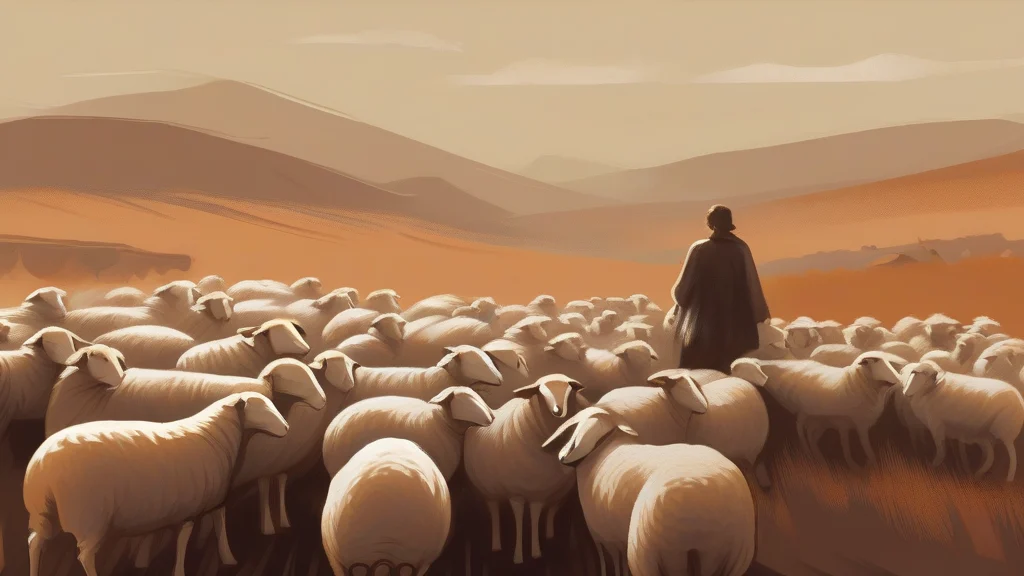
What does herding mean?
Herding is the activity of moving, guiding, and controlling animals as a group, most often sheep or cattle. As a verb, herding describes the work of keeping livestock together, moving them between pasture, or directing them into a pen or onto a vehicle. The related noun names that activity or work and is usually uncountable, though “herding” is also widely used attributively in combinations such as “herding dogs” and “cattle herding.” In figurative use, “herding people” can mean steering them into an orderly group, often suggesting coercion or an overly controlling approach. This connotation appears in political language such as “herding voters,” where the idea is directing a crowd toward a predetermined outcome. The term is common in rural, agricultural, and animal-training contexts. British and US pronunciations differ chiefly in rhoticity, and both forms are otherwise broadly standard. Herding is especially useful when the emphasis is not merely on keeping animals together but on actively directing and managing their collective movement.
The activity or work of moving, guiding, and controlling animals collectively, especially sheep or cattle.
"The herding of sheep across the hillside took all morning."
Normally used as an uncountable noun for the activity or work.
To move, guide, or keep a group of animals together, especially livestock.
"They spent the morning herding cattle into the field."
The gerund is also common as an attributive modifier, as in “herding dogs.”
Rare; the noun is normally used uncountably, especially in combinations such as “cattle herding” and “sheep herding.”
"Local herdings were delayed by heavy rain."
The word behind “herding” began as Old English heord, a term for a herd or flock before it developed into the activity of moving animals together.
Reviewed by Deb Chak, Editor. AI-assisted content curated by RJS Tech Solutions LLP.
Where does herding come from?
Herding is an English formation made from the base word herd with the suffix -ing. The base comes from Old English heord, meaning “herd” or “flock,” and is inherited from Proto-Germanic *herdaz. It has close Germanic relatives, including German Herde and Old Norse hjarður; English later developed herding for the activity of driving and managing such a group.
Related word forms
How herding is actually used
Generally neutral, though figurative uses can suggest coercion, crowd control, or an attempt to direct opinion. The noun is usually uncountable, while the gerund form is especially common in agricultural and animal-training contexts. British English is normally non-rhotic and US English normally rhotic.