
What does herded mean?
Herded is chiefly the past tense and past participle of the verb “herd,” meaning to gather, guide, or drive animals or people together as a group. It is especially familiar in descriptions of shepherds moving sheep or cattle into an enclosure or across a field. The verb can also be applied figuratively to people, as when an official directs a crowd into a room; this usage may imply that the individuals are being treated as an undifferentiated mass. As an adjective, “herded” denotes animals or people kept or brought together in a herd, although this use is less common. The word belongs to everyday British and American English, with no major regional restriction. Its standard pronunciation is /hɜːd/ in British English and /hɜːrd/ in American English. Although “herded” and “heard” may be confused in writing, they contrast clearly in meaning: one concerns movement and grouping, while the other concerns sound perception.
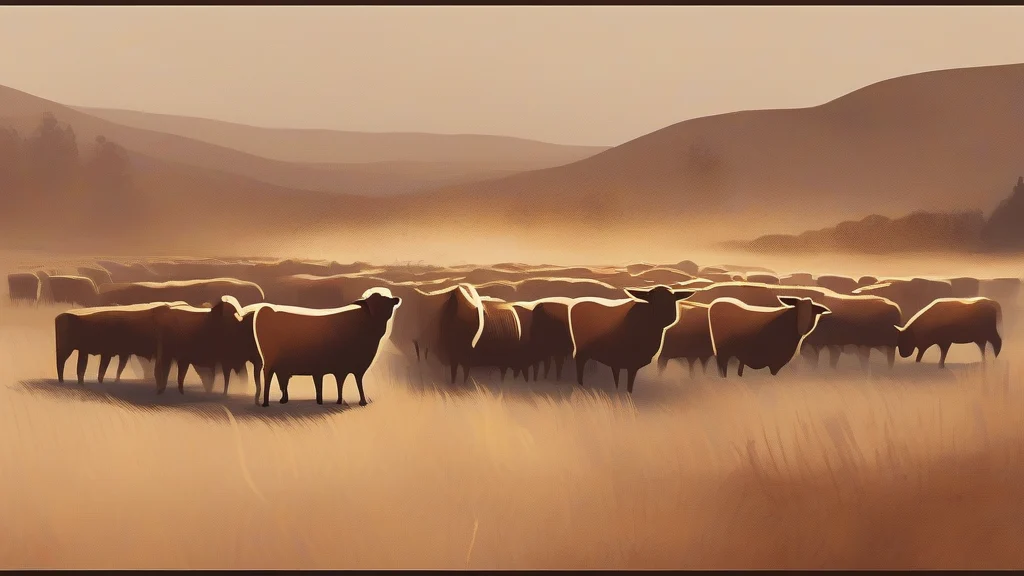
Driven, guided, or gathered into a group or enclosure, especially when referring to animals.
"The rancher herded the cattle into the pen."
Can also refer figuratively to groups of people, often with a dismissive or neutral administrative tone.
Kept or brought together in a herd or group.
"Herded sheep crowded the narrow gateway."
This adjectival use is less common than the verb form and is especially associated with animals.
Herded and heard share letters, not meanings: one moves a flock, while the other fills the mind with sound.
Reviewed by Deb Chak, Editor. AI-assisted content curated by RJS Tech Solutions LLP.
Where does herded come from?
“Herded” is formed by adding the suffix “-ed” to the English verb “herd.” The English word “herd” descends from Old English “heord,” originally denoting a group or flock of animals and ultimately related to Proto-Germanic *herdu. The verb sense, expressing the action of gathering animals into a group or enclosure, developed alongside that older noun. Related forms such as “herder,” “herdsman,” and “herdswoman” continue the same root.
Related word forms
How herded is actually used
The literal use is strongly associated with livestock, while the figurative use of people can sound dismissive, suggesting that individuals are being treated as a uniform mass. The adjectival use is considerably less common than the verb inflection.
Easily confused with herded
“Herded” describes moving people or animals together as a group, whereas “heard” means perceived with the ears.