
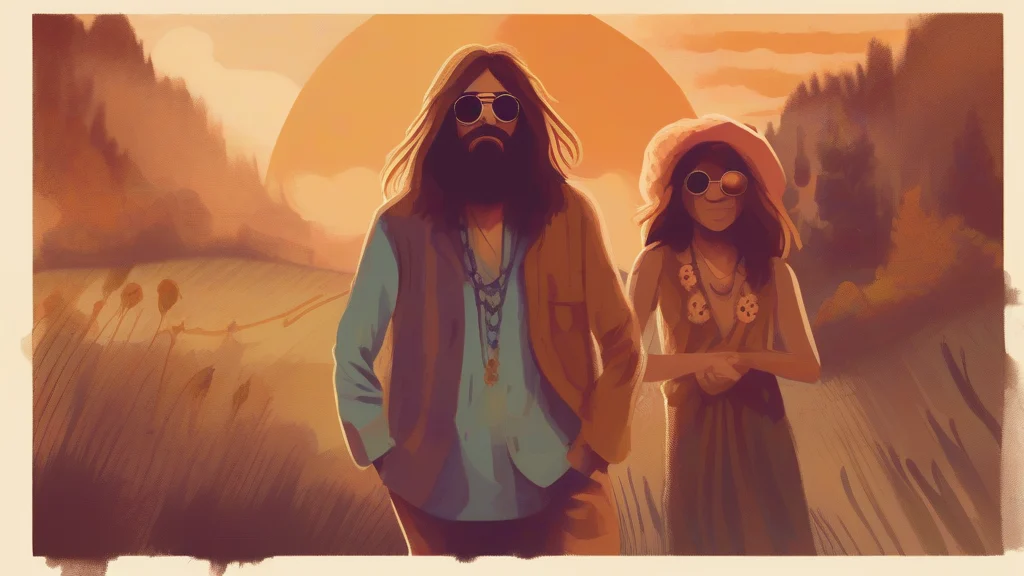
What does hippie mean?
Hippie is an informal noun for a person associated with the nonconformist ideals of the 1960s counterculture. Its historical reference includes the peace movement, flower-power culture, communal living, psychedelic music and art, opposition to the Vietnam War, and resistance to conventional middle-class life. In contemporary use, the word can also describe someone regarded as unconventional, rebellious, or anti-establishment, although it may then sound dated, nostalgic, or ironic. The term is closely associated with broader bohemian traditions but also evokes the distinctive fashion, music, and communal practices of that period. It remains useful because it identifies not merely a personal style but a historically important social and cultural movement. Care is needed in describing individual hippies, since the word has often been applied through simplified or stereotypical assumptions about appearance and behavior.
nounA member of the 1960s counterculture, associated especially with the Beat Generation, peace movement, flower-power culture, communal living, and rejection of conventional social values. In modern informal use, the term may also refer more broadly to someone perceived as unconventional or anti-establishment.
- A participant in the 1960s counterculture, especially one advocating peace, communal living, experimentation, and rejection of established social conventions.
- In modern informal usage, a person regarded as unconventional, rebellious, or resistant to conventional ideas and lifestyles.
"The museum's photographs document the hippie movement's ideals of peace, freedom, and communal life."
"She spent the summer traveling with a group of hippies and sleeping in communal campsites."
"His unconventional style led some colleagues to regard him as an old hippie."
The standard plural adds “-es” and has the pronunciation /ˈhɪpiz/.
"The hippies gathered around the stage, listening to an acoustic performance."
The word “hippie” gave its name to a generation that turned nonconformity into a cultural identity.
Reviewed by Deb Chak, Editor. AI-assisted content curated by RJS Tech Solutions LLP.
Where does hippie come from?
The word was formed in the United States in the early 1960s from “hip,” meaning fashionable or aware of current trends, together with the diminutive suffix “-ie.” It developed alongside the related term “hipster” and became prominent through its association with the period's counterculture. The alternative spelling “hippy” also became established, particularly in British English.
Related word forms
How hippie is actually used
The term is informal and can sound historical, nostalgic, or stereotypical when used for people associated with the 1960s. Its modern use often carries a mildly dismissive or ironic tone.
Easily confused with hippie
A hippie is primarily associated with the 1960s counterculture, whereas a hipster is someone considered fashionable, trendy, or superficially interested in alternative culture.