
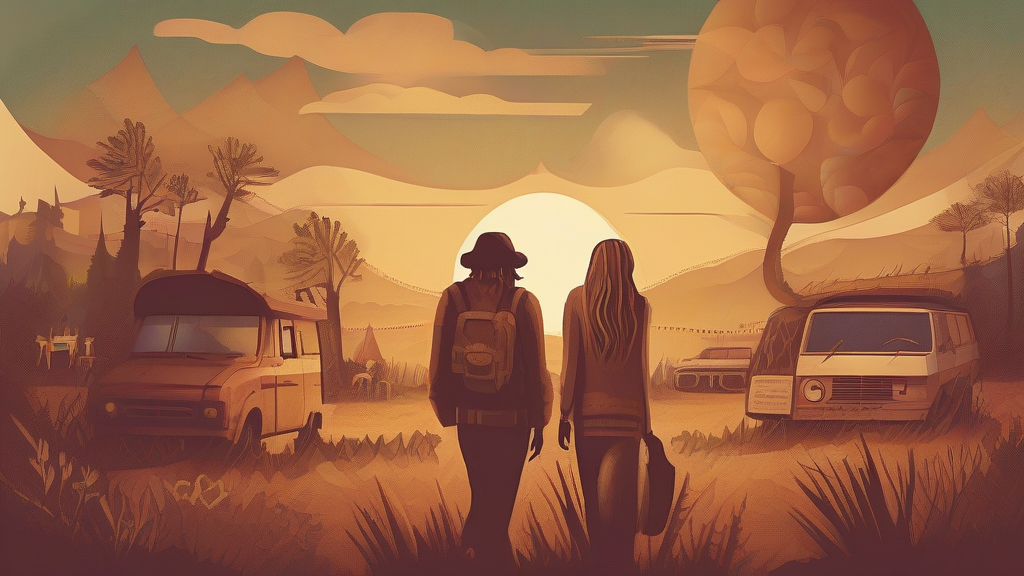
What does hippiest mean?
“Hippiest” is the superlative form of the adjective “hippy,” meaning the most hippie or the most strongly associated with hippie culture. It can describe people, clothing, music, places, events, and other things connected with the alternative lifestyles and countercultural attitudes associated especially with the 1960s. The word often carries a playful, nostalgic, or mildly humorous tone, and it may suggest freedom from convention, a preference for unconventional fashion, or involvement in bohemian culture. In modern informal use, it can also broaden beyond the original 1960s setting to describe anything especially alternative or free-spirited. Because “hippiest” is a superlative, it compares one person or thing with others and normally takes “the”: “the hippiest person at the party.” It should not be confused with “happiest,” which means most happy or joyful.
adjectiveThe most hippie; most associated with hippie culture, alternative lifestyles, or countercultural values.
- Most hippie; most characteristic of hippie culture or associated with a countercultural, alternative lifestyle.
"Their vintage clothing and psychedelic posters made them the hippiest people at the festival."
"The band wore the hippiest clothes imaginable, with bell-bottoms, flowers, and embroidered jackets."
"Historians still debate which festival was the hippiest gathering of the late 1960s."
From the rebellious spirit of the 1960s counterculture, “hippiest” captures the height of hippie style and nonconformity.
Reviewed by Deb Chak, Editor. AI-assisted content curated by RJS Tech Solutions LLP.
Etymology of hippiest
The adjective “hippy” and its spelling variant “hippie” became established in the English-speaking world during the early 1960s, particularly in the United States, as labels for participants in the counterculture. The exact formation of the word is not certain, but it is commonly connected with “hip,” meaning fashionable or aware, together with an informal suffix. “Hippie” became especially familiar in British English, while “hippy” is particularly common in American English; the superlative “hippiest” follows the regular inflection of “hippy.”
Related word forms
How hippiest is actually used
Informal and often humorous or nostalgic. It typically refers to someone or something associated with 1960s hippie culture, but can be used more broadly for alternative or nonconformist styles.
Easily confused with hippiest
“Happiest” means most happy or joyful, whereas “hippiest” means most hippie or most associated with countercultural style.