
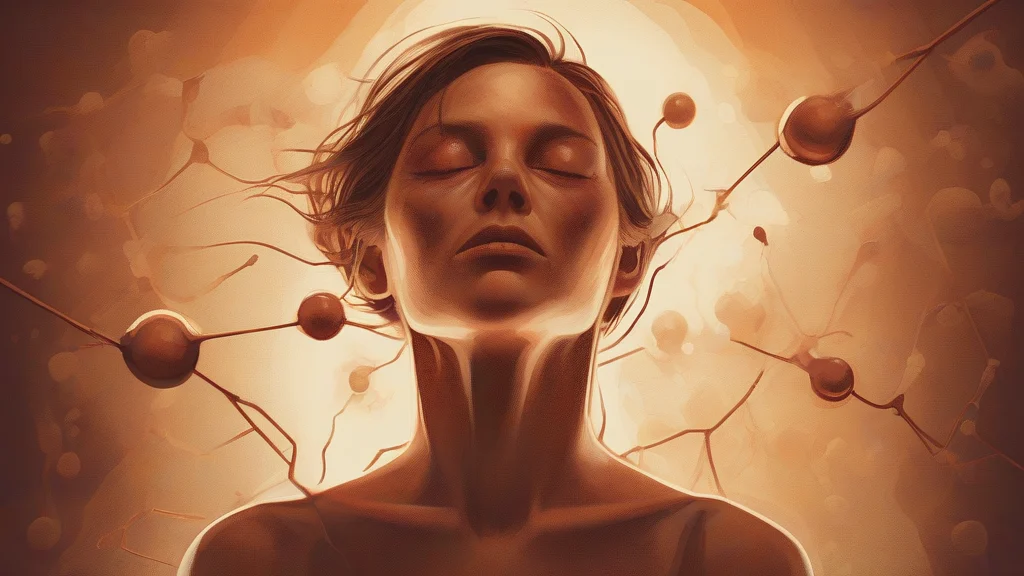
What does hormone mean?
A hormone is a chemical messenger that carries instructions between cells and helps regulate the body’s internal activities. Hormones are produced by glands and specialized cells, travel through the blood or other fluids, and can act on distant tissues at very low concentrations. They influence processes such as growth, metabolism, reproduction, sleep, stress responses, and mood. The word is also used figuratively for a powerful stimulus that encourages development or change, as in describing investment as a hormone for economic growth. In medicine, discussions of hormone levels, hormone therapy, and hormonal balance are common, though the accuracy of popular claims about “hormone balance” varies. Learning the term gives a precise name for a central mechanism of biological coordination.
nounA naturally occurring chemical substance produced by glands and carried in the blood or other bodily fluids, where it regulates the activity of cells, organs, or processes. The term can also refer more broadly to any signaling molecule that influences biological activity.
- A chemical messenger produced by a gland or other specialized cell and released into the blood or another bodily fluid, where it regulates physiological activity.
- A signaling molecule that influences the activity or development of cells, tissues, or organisms.
- A figurative influence or stimulus that provokes a strong response or change.
"Insulin is a hormone that helps regulate the amount of glucose in the blood."
"The thyroid gland produces hormones that help regulate metabolism."
"The growth of the market acted as a hormone for the wider economy."
"Her calm presence was a hormone for confidence in the team."
The plural is standard when referring to multiple hormones or to the class of signaling molecules generally.
"Different hormones coordinate growth, metabolism, and reproduction."
Hormones turn tiny chemical signals into body-wide instructions, coordinating processes as different as growth, sleep, stress, and metabolism.
Reviewed by Deb Chak, Editor. AI-assisted content curated by RJS Tech Solutions LLP.
Where does hormone come from?
The word comes from Greek hormōn, meaning “that which excites” or “something that sets in motion,” a form related to the verb hormein, “to set in motion” or “to urge.” It entered English in the early 20th century, initially in the context of physiology and internal secretion, before developing broader figurative uses.
Related word forms
How hormone is actually used
In technical biology and medicine, the term usually refers to a chemical messenger produced by an endocrine gland. In figurative use, it is especially common in journalism and business writing when describing a powerful catalyst or stimulus.
Easily confused with hormone
Hormone replacement therapy is a treatment involving hormones, whereas a hormone is the signaling molecule itself.