
What does horsemen mean?
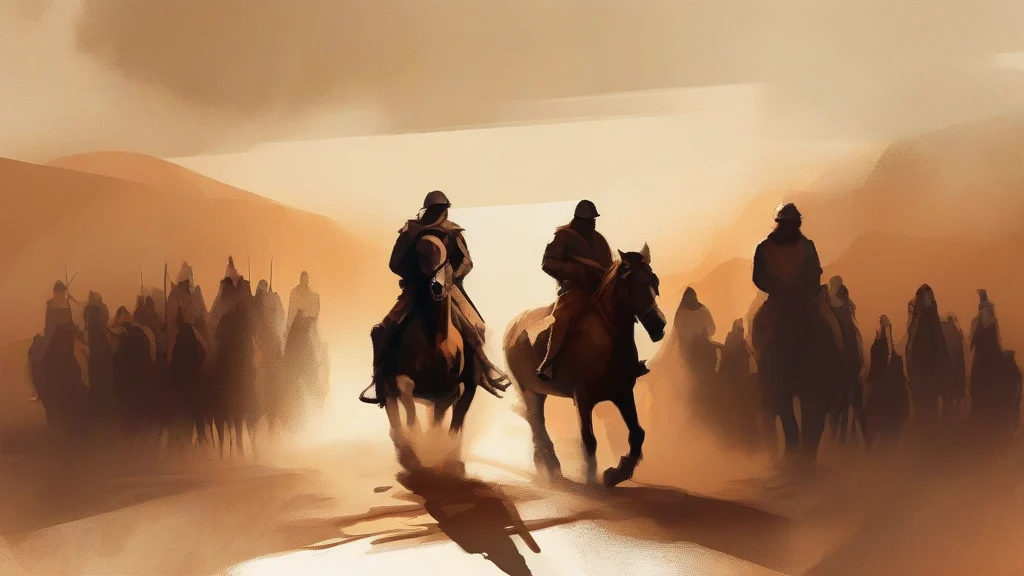
Horsemen is the plural of horseman, meaning people who ride horses. Its clearest traditional use is for soldiers mounted on horseback, especially cavalry or military forces operating on the frontier, in battle, or during a ceremonial entrance. The word can also refer more generally to a group of horse riders, including participants in hunts, processions, races, or other equestrian events. It often carries historical, literary, or dramatic associations because mounted soldiers have long been important in warfare, travel, and public ceremony. In biblical and cultural traditions, the phrase "the Four Horsemen" comes from the Book of Revelation and has become a widely recognized image of catastrophe and judgment. In ordinary modern conversation, however, "riders" or "horse riders" may sound more natural. Horsemen is therefore both a precise historical noun and a useful collective term when the emphasis is on people travelling or acting from horseback.
noun (plural)Horsemen are men who ride horses, especially soldiers who fight on horseback. The term can also refer collectively to horse riders or mounted participants in a procession, hunt, or other activity.
- Men who ride horses, especially mounted soldiers or members of a cavalry.
- Horse riders collectively, as in a procession, hunt, or other organized riding event.
"The mounted horsemen rode across the field as the crowd cheered."
"The horsemen were stationed at the edge of the valley."
"Horsemen and women in period costume took part in the historical procession."
The standard plural of horseman, with the irregular change from "man" to "men."
"The horsemen dismounted and led their horses toward the stable."
From battlefield cavalry to the Four Horsemen of Revelation, horsemen have long symbolized speed, power, and dramatic arrival.
Reviewed by Deb Chak, Editor. AI-assisted content curated by RJS Tech Solutions LLP.
Where does horsemen come from?
Horsemen is the plural form of horseman, a compound formed in Middle English from "horse" and "man." The first element ultimately continues Old English "hors," while the second is the familiar English word for a person. The plural ending -men reflects the irregular plural pattern used in words such as man, woman, and human. Related forms such as horseback, horseshoe, and horsepower preserve the same historical horse element in modern English.
How horsemen is actually used
The word is most common in literary, historical, and military contexts. It can sound formal or traditional, while "horse riders" and "riders" are more neutral in everyday speech. In religious and cultural references, "the Four Horsemen" refers to four symbolic figures associated with the Book of Revelation.
Easily confused with horsemen
A horseman is a single rider of a horse, while horsemen is the plural form referring to more than one.