
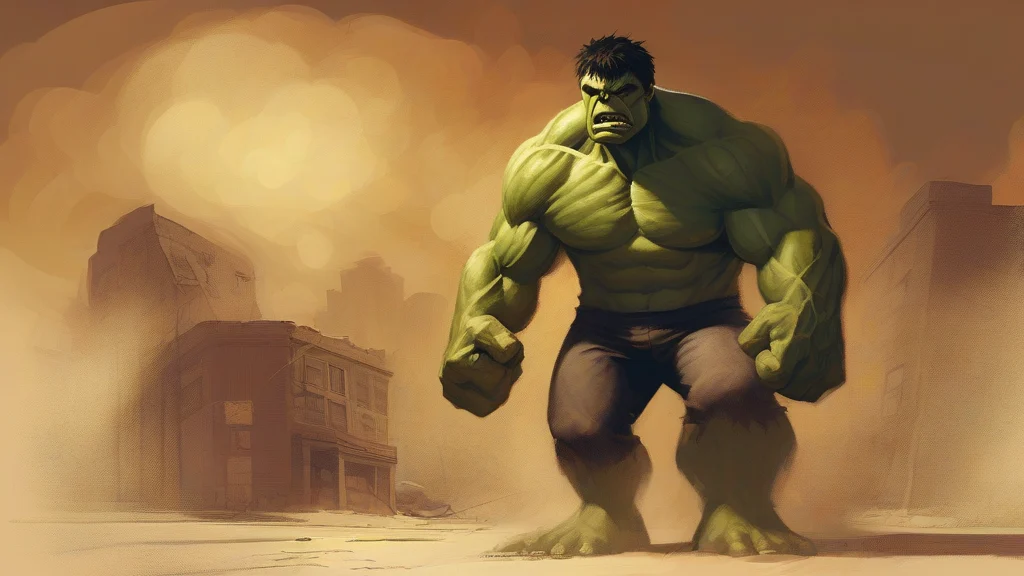
What does hulked mean?
Hulked describes something that is massive, bulky, or awkwardly heavy in appearance. Applied to a person, it can suggest an imposing physique, though it may also imply that the person moves clumsily or has an ungainly bearing. As a verb, “hulked” describes moving or behaving in a lumbering, unwieldy manner: someone may hulk through a doorway, around a room, or along a path. The word often conveys visual weight and limited maneuverability rather than simple size. Its imagery is strongly physical, extending from large ships and heavy machinery to muscular or awkward human figures. This makes “hulked” especially effective in descriptive writing, where a few words can communicate both mass and constrained movement. It is uncommon in highly formal business or technical prose, but it remains natural in literary, journalistic, and informal descriptive contexts.
Bulky, massive, or awkward-looking.
"The hulked ironwork formed a dramatic arch across the plaza."
Usually connotes awkwardness or limited mobility as well as great size.
To move or behave in a clumsy, unwieldy manner.
"The wrestlers hulked toward each other across the ring."
This use is intransitive and often implies heavy, lumbering movement.
From a full-sized ship to a lumbering bodybuilder, “hulked” gives something the visual weight of being massive and hard to maneuver.
Reviewed by Deb Chak, Editor. AI-assisted content curated by RJS Tech Solutions LLP.
Where does hulked come from?
Hulk descends through Middle English hulke from Old English hulc, a word associated with the body, form, or bulk and also used for a large vessel. The noun developed into the familiar sense of a massive ship, especially an old or damaged one. By the mid-19th century, hulk was also used for clumsy, unwieldy movement, a sense that produced the verb form hulked.
Related word forms
How hulked is actually used
As an adjective, “hulked” suggests bulk as well as awkwardness or an imposing appearance. As an intransitive verb, it describes heavy, clumsy movement and can sound mildly disparaging when applied to a person. The word is more literary and figurative than everyday neutral vocabulary.