
What does hullabaloo mean?
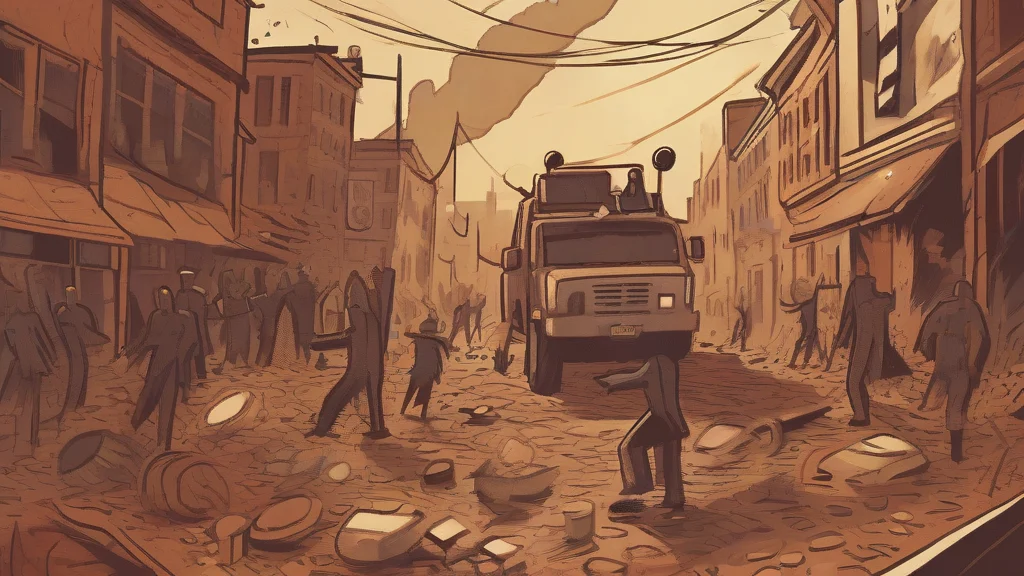
A hullabaloo is a loud, confused commotion marked by noise, excitement, argument, or disorder. The word can refer either to the confused sound itself or to the events and activity producing it. It is especially natural in descriptions of crowds reacting dramatically, public controversy, or an unexpectedly chaotic situation. Because “hullabaloo” has an old-fashioned, mildly humorous sound, it often adds emphasis or a touch of exaggeration to everyday speech. In formal writing, terms such as “commotion,” “uproar,” or “tumult” are usually more suitable. The word is recognized in both British and American English and is not restricted to any particular region.
nounA loud, confused noise caused by a commotion, argument, or general excitement. It can also refer to the confused activity or disorder itself.
- A loud, confused noise or commotion, especially one caused by a crowd, argument, or excited reaction.
- A scene of disorder, confusion, or vigorous activity.
"The announcement sparked a hullabaloo throughout the stadium."
"A loud hullabaloo arose as soon as the concert tickets went on sale."
"The committee was plunged into a hullabaloo after the unexpected resignation."
Used when referring to separate instances of commotion or uproar.
"The rumours caused hullabaloos in several parts of the city."
From a battle cry to a modern mess of noise and confusion, “hullabaloo” captures the sound of public excitement turning chaotic.
Reviewed by Deb Chak, Editor. AI-assisted content curated by RJS Tech Solutions LLP.
Where does hullabaloo come from?
The word appeared in the early 18th century, probably as an alteration or development of earlier cries such as “hallaloo” and “hallo.” Its original associations included shouts and public cries. The modern sense developed from these noisy calls to mean any loud commotion or confused uproar.
How hullabaloo is actually used
The word is informal and generally carries a slightly comic or exaggerated tone. It is often used for noisy, disorderly situations rather than serious danger.