
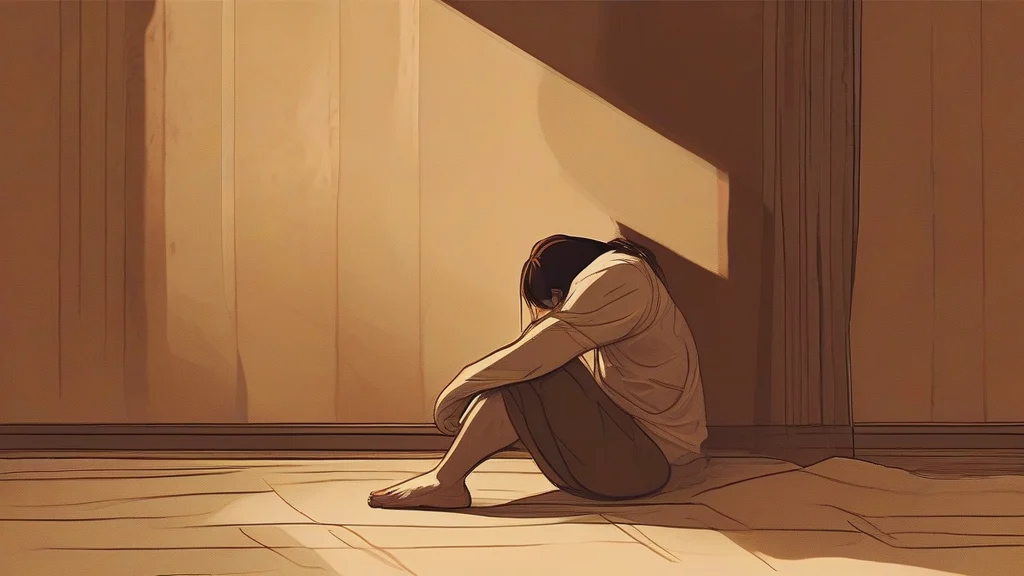
What does hunching mean?
Hunching means raising or drawing the shoulders forward, frequently while bending the upper body. The posture can suggest protection from cold, discomfort, anxiety, shame, or uncertainty, as when someone hunches their shoulders or draws them in close to the body. It can also describe concentrating on something, as in “hunching over a book,” where the person leans forward and becomes absorbed in reading or examining it. Hunching is the present participle of the verb “hunch” and is used in everyday speech and formal writing alike. Compared with words such as “stooping” or “crouching,” it focuses especially on the movement or position of the shoulders. The word is useful for describing body language that communicates both physical discomfort and an inward, guarded, or concentrated state.
verb (present participle)Hunching is the act of raising or drawing the shoulders forward, usually while bending the upper body forward. It can describe a protective, contemplative, or concentrated posture.
- Raising or drawing the shoulders forward, especially as a protective or self-contained posture.
- Bending the upper body forward over something, often while concentrating on a task or examining something closely.
"She sat hunched over the table, hunching her shoulders as she read the letter."
"He stood by the window, hunching his shoulders against the cold."
"She was hunched over her laptop, trying to finish the report before midnight."
Reviewed by Deb Chak, Editor. AI-assisted content curated by RJS Tech Solutions LLP.
Etymology of hunching
Hunching is the English present participle of “hunch,” a verb meaning to raise or draw in the shoulders. It belongs to the older English word family associated with a rounded projection or lump, including “hunchback” and “hunchbacked.” The verb’s familiar modern sense developed from the physical image of a person bending or drawing the shoulders forward, while “hunching over” extended the idea to a posture of close concentration.
How hunching is actually used
The word is neutral in register and common in both British and American English. It often conveys a closed, protective, tense, or intensely focused posture.