
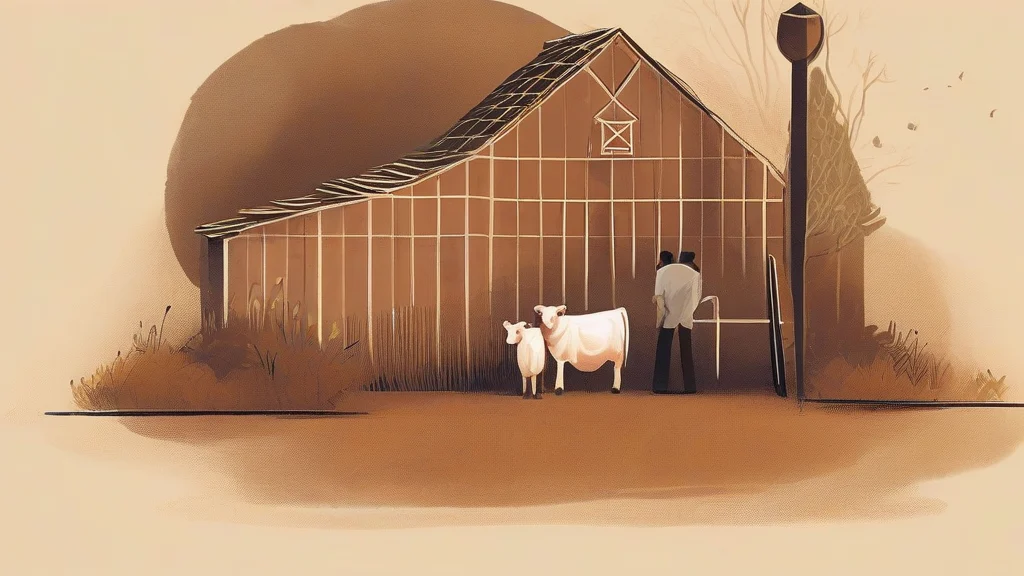
What does husbandry mean?
Husbandry means the careful management of a farm, household, or other set of resources. Its most familiar modern use is agricultural: good animal husbandry involves breeding, feeding, housing, and caring for livestock, while agricultural husbandry more broadly concerns the efficient management of land and farming operations. The word can also describe prudent management generally, as in the expression "good husbandry," especially when money, time, or household resources are being handled economically. Husbandry therefore carries a practical and approving sense of disciplined stewardship rather than simple activity or ownership. It suggests knowing how to maintain a system, prevent waste, and obtain useful results. In modern English, its farming sense is probably the most familiar, but older literary and household contexts use it for the orderly management of domestic affairs. Today it can lend a traditional or slightly formal tone, particularly when describing personal finances, while remaining a precise and evocative word for careful management.
nounThe management of a household, farm, or other resource system, especially with a view to efficiency, economy, or good results. In modern usage, it most often refers to farming and agricultural management, while also meaning careful management more generally.
- The management of a farm, livestock, or agricultural land.
- Careful, economical, or effective management of a household, business, or other resources.
- The practice or system of managing a household or property, especially in older usage.
"Good husbandry and a long growing season have kept this small farm productive for generations."
"The valley's improved husbandry has brought richer harvests and more reliable milk production."
"Her husbandry of the household budget allowed the family to save for its first home."
"The course covers animal husbandry, including feeding, breeding, and the welfare of farm animals."
The plural is uncommon and is used when referring to distinct systems, practices, or forms of management.
"The two regions have developed husbandries suited to very different climates."
Husbandry hides a household idea inside a farming word: it is the art of getting the most from land, livestock, and resources without wasting them.
Reviewed by Deb Chak, Editor. AI-assisted content curated by RJS Tech Solutions LLP.
Etymology of husbandry
Husbandry is an English formation built on the word "husband" with the suffix "-ry," a suffix used to form nouns indicating an activity, condition, or field. The word developed in Middle English with meanings connected both to household management and to farming or the management of a household's resources. Its historical association with household and agricultural stewardship explains the range from domestic economy to animal and agricultural management. Related English words such as "household," "housekeeping," and "housebound" preserve the older house-and-household element in the word's family.
How husbandry is actually used
The agricultural sense is common and established. When referring to household budgeting or personal economy, the word can sound formal, traditional, or somewhat old-fashioned, though it remains idiomatic in phrases such as "good husbandry."