
What does hussar mean?
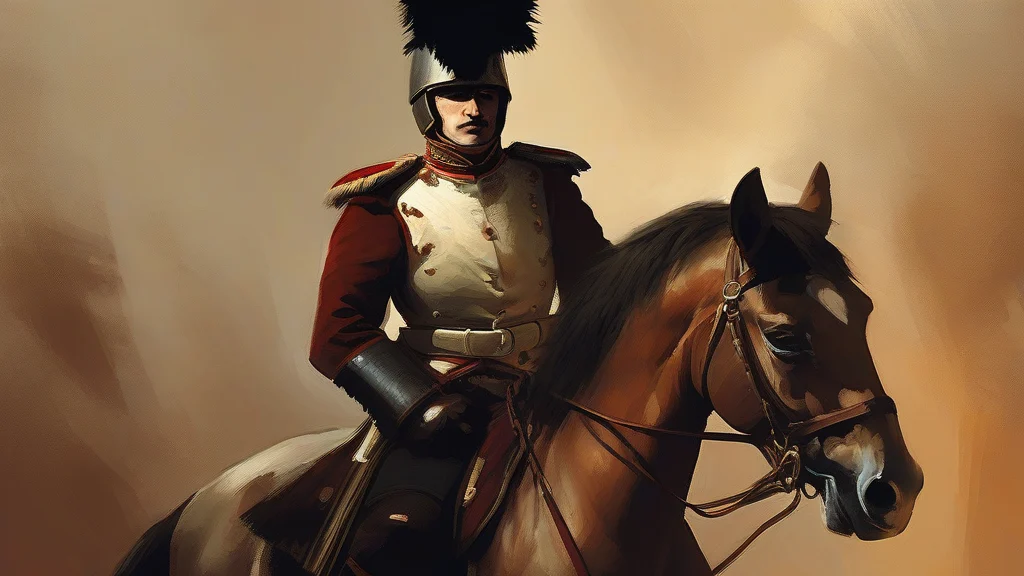
Hussar denotes a soldier belonging to a hussar, traditionally a regiment of light cavalry. Such units became prominent in European armies during the 17th and 18th centuries and were valued for speed, maneuverability, and reconnaissance rather than the heavier fighting associated with armored cavalry. The word also evokes the braided jackets, fur caps, colorful uniforms, and bold maneuvers traditionally associated with mounted hussars, although these visual details were not uniform across every unit or country. Today, hussar is most often historical or used as the continuing name of a particular military regiment. In ordinary speech, it should not be used as a general term for any horseman or cavalry soldier: a hussar belonged to a specific style of light cavalry organization. The word is especially useful because it preserves both a precise military history and a vivid cultural image of early modern European warfare.
nounA soldier of a light cavalry regiment, especially in European armies of the 17th through 19th centuries; later, a member of a military unit retaining the traditional hussar name.
- A member of a light cavalry regiment, especially in the European armies of the 17th through 19th centuries.
- A member of a historical or modern military unit that retains hussar in its name, even when it no longer serves on horseback.
"The museum displays the braided jacket of a nineteenth-century hussar."
"The museum displays the braided jacket of a nineteenth-century hussar."
"The regiment preserves its hussar identity despite serving in a mechanized form."
The standard plural is hussars; the form may refer to individual soldiers or collectively to members of hussar regiments.
"Several hussars rode along the parade route in full ceremonial dress."
Some hussar regiments abandoned horses—and kept the name.
Reviewed by Deb Chak, Editor. AI-assisted content curated by RJS Tech Solutions LLP.
Where does hussar come from?
The English word entered through French hussard, borrowed from Hungarian huszár. It became established in European military vocabulary for light cavalry during the early modern period. Related forms include German Husar, Polish huzar, and Czech husař, reflecting the same Hungarian source and the international spread of the military term.
How hussar is actually used
Chiefly historical in general descriptions, though the term remains appropriate when naming a surviving hussar unit. It is more specific than cavalryman and should not be used for an arbitrary mounted soldier.