
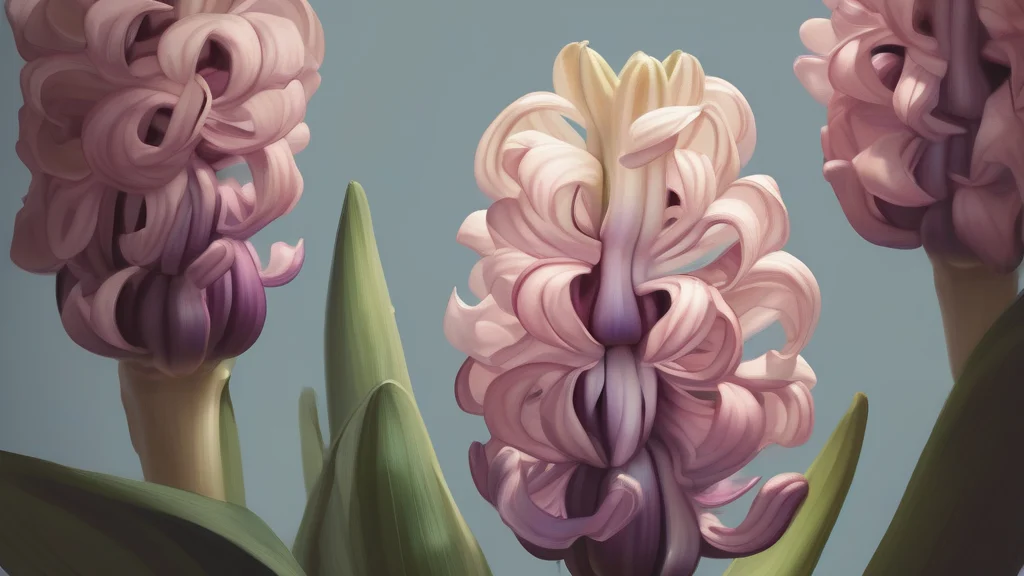
What does hyacinth mean?
A hyacinth is a widely grown bulbous flowering plant, especially valued for its upright flower spikes and intense fragrance. Its blooms commonly appear in spring in shades including white, yellow, pink, blue, and purple. The bulbs are planted in autumn and often kept in pots or window boxes, where their flowers can be enjoyed close to the house. In older literary and mineralogical usage, “hyacinth” also denotes a reddish variety of zircon, a gemstone prized for its vivid colour and transparency. The modern plant name comes through Latin from the ancient Greek hyakinthos, originally associated with the youth Hyacinthus in Greek mythology. The word is useful because it refers both to a familiar, fragrant garden flower and, in a more specialized sense, to a richly coloured gemstone.
A bulbous flowering plant of the genus Hyacinthus, with fleshy leaves and dense clusters of fragrant flowers.
"The hyacinths produced a powerful fragrance in the warm spring air."
Common in British and American English for cultivated garden and potted flowering plants.
A reddish or reddish-brown variety of zircon used as a gemstone.
"The antique brooch contained a small but exceptionally clear hyacinth."
Chiefly literary, historical, or specialist; also spelled jacinth in some gemstone contexts.
The plural is used for individual plants or flower clusters, as in “a pot of hyacinths.”
"Bright hyacinths filled the window boxes."
The flower takes its name from the Greek myth of Hyacinthus, a beautiful youth whose name was preserved by a flower that bloomed from his blood.
Reviewed by Deb Chak, Editor. AI-assisted content curated by RJS Tech Solutions LLP.
Where does hyacinth come from?
The word comes from Latin hyacinthus, borrowed from the ancient Greek hyakinthos. In Greek tradition, the flower was linked to Hyacinthus, a youth killed by a discus and commemorated by a flower that grew from his blood. The gemstone sense developed through the same ancient association with precious or ornamental stones, while the modern plant sense refers to the familiar genus Hyacinthus.
Related word forms
How hyacinth is actually used
For the plant, the word is ordinary in British and American English. The gemstone sense is chiefly literary or specialist and may imply a warm red, orange, or reddish-brown colour.
Easily confused with hyacinth
Hyacinth is the common English name for the flowering plant, while Hyacinthus is the scientific genus name.