
What does insurgence mean?
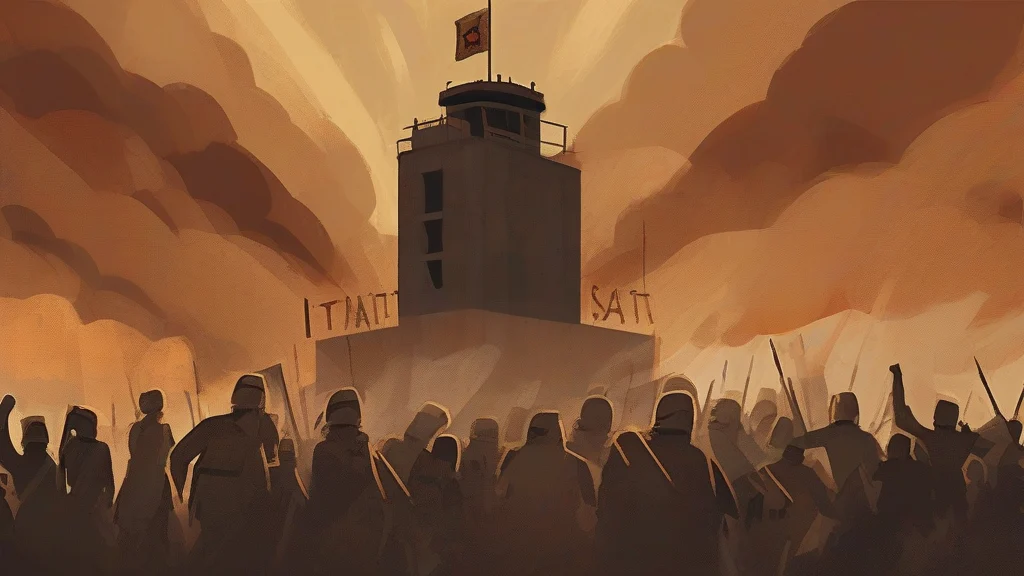
An insurgence is an organized uprising against a government, authority, or established order, especially one involving armed resistance. The term is used particularly in political, military, and historical contexts and conveys more than a peaceful protest, while remaining less common in everyday English than the closely related word “insurgency.” It may describe a movement, a revolt, or the broader phenomenon of organized resistance within a state or occupied territory. In news and academic writing, expressions such as “armed insurgence” and “counterinsurgence” distinguish the conflict itself from measures intended to resist or suppress it. The word derives from Latin roots meaning “to rise against” or “to rise up,” reflecting its central image of people mounting a challenge to authority.
nounAn uprising or act of rebellion against a government, authority, or established order, especially one involving organized resistance or violence.
- An organized revolt or rebellion against a government, authority, or established order, especially one involving armed resistance.
"The government called for an end to the armed insurgence in the region."
"The rebellion began as a small protest but developed into a sustained insurgence."
"The report documented the brutal suppression of the insurgence and the displacement of civilians."
Usually used in the plural when referring to armed rebellions or movements against authority.
"The report examines several insurgences that followed the collapse of the central government."
The word literally means “a rising up”: it comes from Latin roots associated with rising against authority.
Reviewed by Deb Chak, Editor. AI-assisted content curated by RJS Tech Solutions LLP.
Where does insurgence come from?
“Insurgence” comes from Latin insurgere, meaning “to rise against” or “rise up,” formed from in- (“against” or “into”) and surgere (“to rise”). Its English form developed in the 17th century in the sense of a rising or rebellion. The same Latin root underlies “insurgent,” “insurrection,” and “resurrect,” while “surge” comes from the related root surgere.
Related word forms
How insurgence is actually used
“Insurgence” is formal and relatively uncommon in contemporary English. It is most often used in political, military, and historical contexts, while “insurgency” is generally more common.
Easily confused with insurgence
Both words refer to organized resistance against authority, but “insurgence” is more formal and literary, while “insurgency” is the more common modern term.
An insurrection is generally a broad revolt or uprising against a government, whereas an insurgence more often emphasizes continuing armed or organized resistance within a territory.