
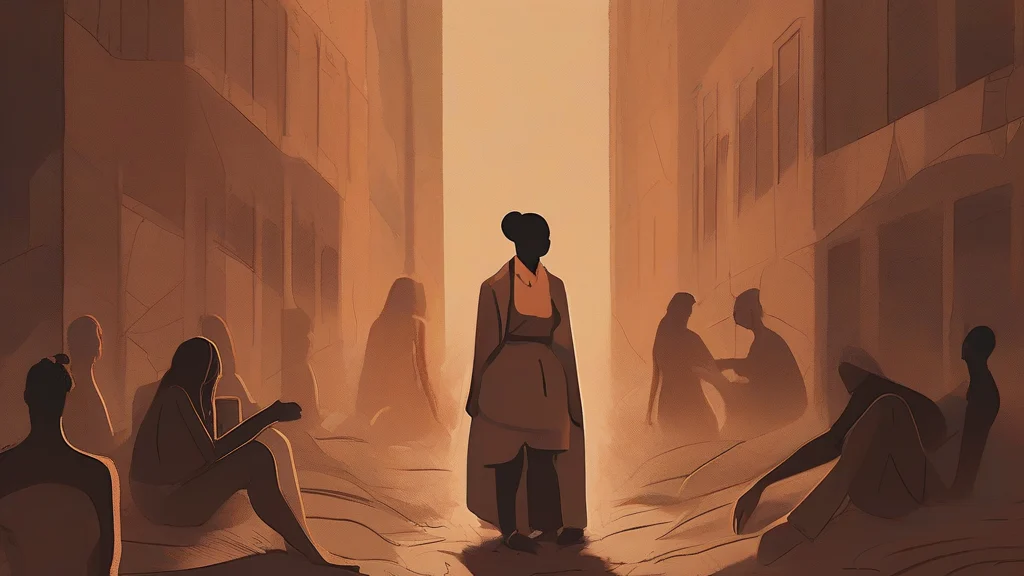
What does intersectional mean?
Intersectional is an adjective describing an approach or situation in which different identities, categories, or systems of influence overlap and interact. In its best-known social use, it refers to examining how factors such as race, gender, class, sexuality, and disability can combine to shape people's experiences of privilege or discrimination. For example, an intersectional account of employment may consider how race and gender together affect opportunities and treatment rather than treating either identity in isolation. The word can also be used more broadly for work that brings together distinct perspectives, methods, or areas of study. It is especially associated with Black feminist and critical-race scholarship, and with the broader movement known as intersectionality. In current usage, the term often signals attention to overlapping systems of power and to experiences that cannot be adequately explained by considering one category alone.
Relating to or involving the overlap of different social identities, categories, or systems of influence.
"The policy review adopted an intersectional perspective on inequality."
This is the dominant modern use, especially in social-science, feminist, political, and equality discourse.
Involving the crossing or interaction of distinct elements, perspectives, or fields.
"The conference was deliberately intersectional, bringing together researchers from several disciplines."
This broader use is less frequent than the social-identity sense but is established in academic and cultural contexts.
Intersectionality asks not only who is affected by inequality, but how different forms of disadvantage can combine to produce experiences that no single category explains.
Reviewed by Deb Chak, Editor. AI-assisted content curated by RJS Tech Solutions LLP.
Where does intersectional come from?
Intersectional was formed in the late twentieth century by adding the suffix -al to intersection, with the sense of relating to intersections among social categories. The underlying word intersection comes through French from Latin intersectio, a noun derived from intersecare, meaning “to cut together,” from inter- and secare, “to cut.” The adjective became widely influential in feminist and queer scholarship during the late twentieth and early twenty-first centuries, especially following Kimberlé Crenshaw's 1989 work on the experiences of Black women. Its modern social meaning develops the older geometrical sense of a crossing point into a broader idea about the interaction of identities and structures.
Related word forms
How intersectional is actually used
The word is most common in academic, political, and social-justice contexts. It became especially prominent through work associated with Black feminist thought, particularly Kimberlé Crenshaw's influential 1989 scholarship.
Easily confused with intersectional
An intersection is a point or area where roads, lines, or other features cross, whereas an intersectional description examines how multiple identities or categories overlap and interact.