
What does irrigation mean?
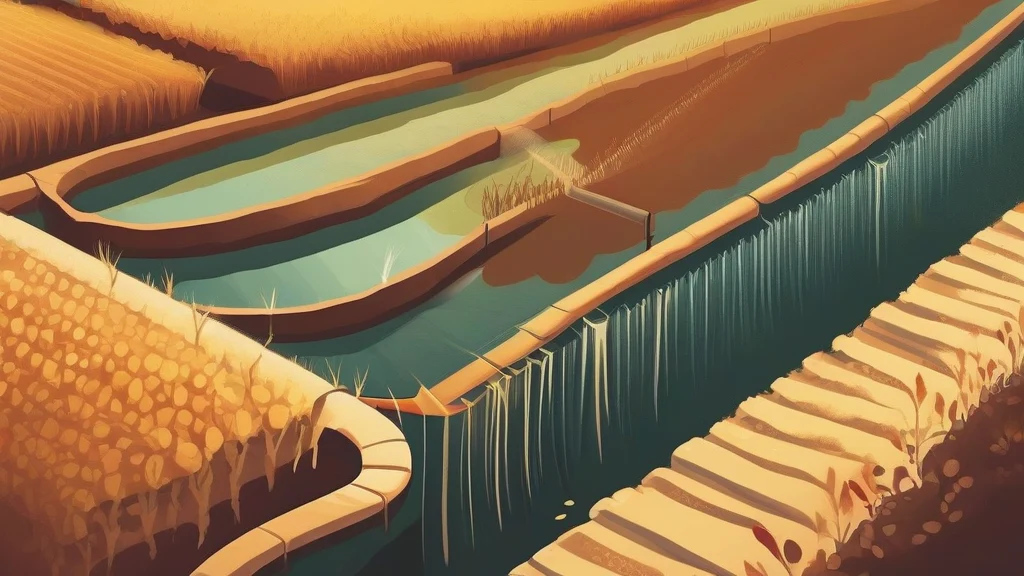
Irrigation is the controlled supply of water to land, most often to support crops, but also for gardens, parks, and other cultivated areas. The term can refer both to the process of watering and to the channels, pipes, pumps, sprinklers, and other infrastructure that make it possible. Irrigation is especially important in regions with unreliable rainfall or where seasonal water shortages threaten agricultural production. Its use does not necessarily imply a particular technology: traditional flood irrigation and modern drip or sprinkler systems are all forms of irrigation. The word is common in discussions of agriculture, water management, drought, and crop production, and it is generally neutral in tone, although its mention may introduce concerns about water use, efficiency, or environmental impact.
nounThe process of supplying water to land or crops, especially through an organized system of channels, pipes, or sprinklers. It can also refer to the water or system used for this purpose.
- The artificial watering of land, especially agricultural land, to provide crops with water.
- The system or supply of water used for this purpose.
"Farmers rely on irrigation to keep crops watered during long periods of dry weather."
"The new irrigation system reduced the farm’s water consumption."
"Careful irrigation can keep ornamental gardens alive during a prolonged drought."
Usually uncountable when referring to the general process; the plural is uncommon and is used mainly for distinct acts or systems of irrigation.
"The valley’s ancient irrigations transformed arid land into productive farmland."
Without irrigation, some of the world’s most productive farmland would depend entirely on the weather.
Reviewed by Deb Chak, Editor. AI-assisted content curated by RJS Tech Solutions LLP.
Where does irrigation come from?
The word comes from late Middle English, ultimately from Latin irrigationem, a noun derived from irrigare, “to water.” The Latin verb combined the prefix in- with rigare, meaning “to water” or “to moisten.” English borrowed the word in the context of watering land and later developed associated forms such as irrigate and irrigator.
Related word forms
How irrigation is actually used
Usually used in agriculture, horticulture, and land management. It is generally neutral or technical, though it can imply a human intervention that compensates for insufficient rainfall.
Easily confused with irrigation
Irrigation supplies water to land or crops, whereas drainage removes excess water from it.