
What does isochrone mean?
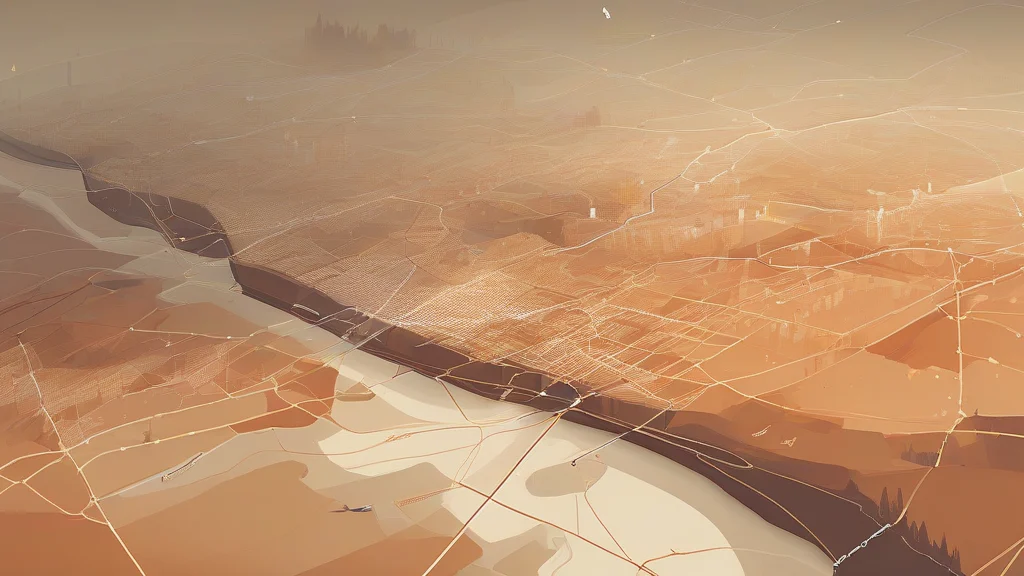
An isochrone is a map contour connecting locations that take the same amount of time to reach from a chosen starting point. Unlike an ordinary distance circle, it represents equal travel time rather than equal physical distance, so it can account for roads, public transport, traffic, terrain, and other barriers. Isochrones appear in transport and urban planning, where they help compare accessibility to jobs, schools, hospitals, shops, or emergency services. For example, a thirty-minute isochrone around a railway station identifies the areas reachable by train or another mode within that period. The word combines Greek roots meaning “equal” and “time,” making it especially useful when discussing how modern transport systems shape the practical reach of a place.
nounA line on a map joining points that can be reached from a particular location in the same amount of time. Isochrones are commonly used in transport planning to show changes in travel time caused by distance, road layout, traffic, or other barriers.
- A contour on a map connecting points that are equally distant in travel time from a specified origin.
"The map uses an isochrone to show which neighborhoods can be reached from the station within thirty minutes."
"The twenty-minute isochrone expands considerably once the new railway station opens."
"Urban planners used isochrone analysis to compare residents' access to emergency services."
The plural is isochrones, pronounced with a final /z/ sound.
"The researchers compared isochrones for public transport, cycling, and walking."
An isochrone turns a map into a clock, revealing where the same journey takes minutes or hours.
Reviewed by Deb Chak, Editor. AI-assisted content curated by RJS Tech Solutions LLP.
Where does isochrone come from?
The word isochrone comes from the Greek prefixes iso- and -khronos. The first means “equal,” while the second is related to chronos, “time,” and is the source of English words such as chronology and chronometer. The compound was coined in the nineteenth century for map lines joining places reached in equal amounts of time.
Related word forms
How isochrone is actually used
This is primarily a technical term in geography, transport planning, and cartography. In general usage, an isochrone is usually understood as a line rather than the entire mapped area, although the term is sometimes used loosely for the area enclosed by such a line.