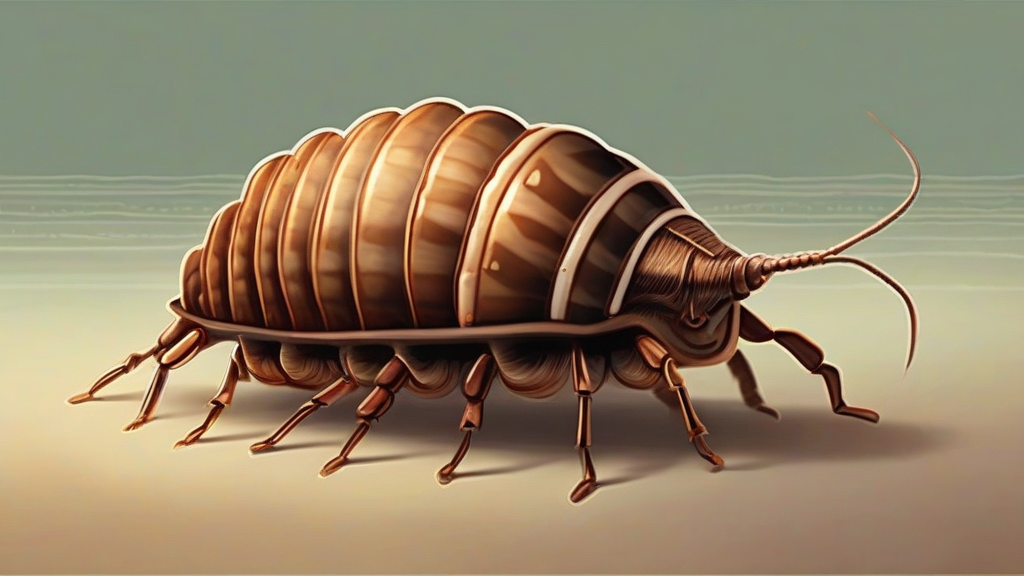
What does isopod mean?
An isopod is a type of crustacean characterized by its segmented body and seven pairs of legs. Isopods are often found in marine or terrestrial environments and are also known as pill bugs or rolly pollies. They have a unique defense mechanism of curling up into a ball for protection. The term 'isopod' is primarily used in scientific and biological contexts. Isopods play an important role in ecosystems as both predators and prey. They are a diverse group, ranging from small terrestrial species to large marine ones. Understanding isopods can provide insights into the evolution and adaptation of crustaceans.
nounAn isopod is a type of crustacean that has a segmented body and seven pairs of legs, often found in marine or terrestrial environments. They are also known as pill bugs or rolly pollies.
- A type of crustacean.
- A specific order of crustaceans (Isopoda).
"The isopod curled up into a ball for defense, its armored shell protecting it from predators."
"Isopods are often found in damp environments, such as under rocks or in decaying wood."
"The isopod order includes a wide range of species, from small terrestrial ones to large marine isopods."
The plural form 'isopods' is used when referring to multiple individuals of this crustacean.
"The researcher collected several isopods from the marine environment for further study."
Reviewed by Deb Chak, Editor. AI-assisted content curated by RJS Tech Solutions LLP.
Etymology of isopod
The term 'isopod' originates from the Greek words 'isos' meaning 'equal' and 'pous' meaning 'foot', referring to the equal structure of their legs. The order Isopoda was first described by Burmeister in 1825. Isopods are part of the class Malacostraca, which also includes lobsters and crabs.
How isopod is actually used
The term 'isopod' is primarily used in scientific and biological contexts, while 'pill bug' or 'rolly pollie' are more commonly used in informal settings.