
What does woodlouse mean?
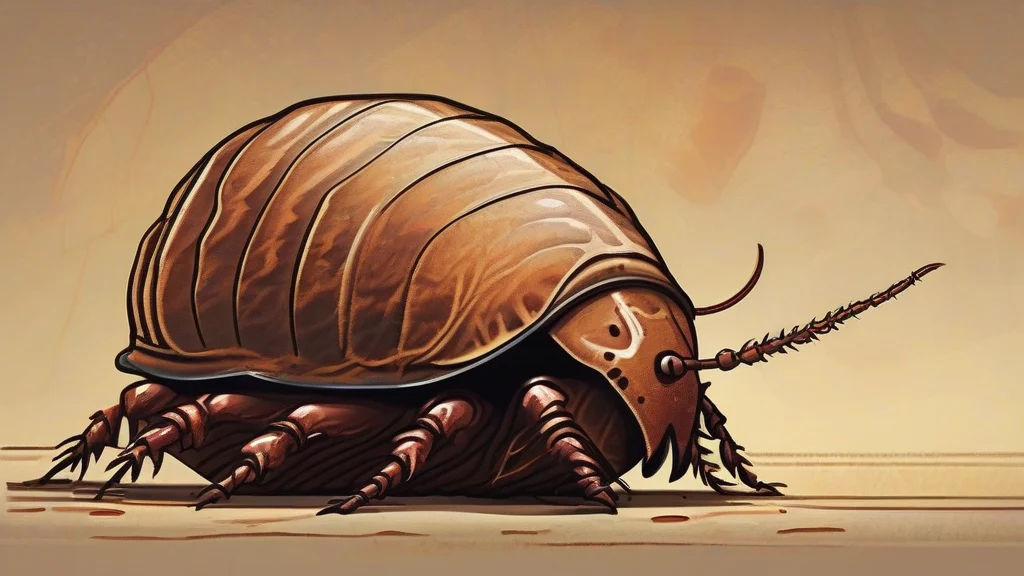
Woodlouse is a small, land-dwelling crustacean commonly encountered beneath stones, logs, leaf litter, and other damp places. Its flattened body, segmented shell, and numerous legs can make it resemble a small insect, but it is actually an isopod, a member of the crustacean group that includes pill bugs and related animals. The word is especially common in British English, although woodlouse and pill bug are both used in North America. A single animal is a woodlouse, while the usual plural is woodlice. Woodlice are harmless to people and generally feed on decaying plant material and other organic debris, although large gatherings can make them conspicuous in gardens, basements, and greenhouses. The name combines wood and louse, reflecting the animal’s louse-like appearance and its frequent association with damp wood and woodland debris.
nounA small terrestrial isopod crustacean, typically found beneath stones, in damp leaf litter, and around decaying wood. Despite its name, it is a crustacean rather than a true louse or insect.
- A small, flattened, terrestrial isopod crustacean found in damp places, especially under stones, logs, and leaf litter.
"A woodlouse scurried across the path after the rain disturbed its shelter beneath the fallen leaves."
"The gardener found several woodlice sheltering under the compost bin."
"A heavy infestation of woodlice left damp trails along the edge of the cellar wall."
The plural is irregular in form but generally regular in syntax, taking a plural verb.
"Several woodlice were found beneath the damp leaves."
A woodlouse may look like a tiny bug, but it is a crustacean: a distant relative of crabs and shrimp that has mastered life on land.
Reviewed by Deb Chak, Editor. AI-assisted content curated by RJS Tech Solutions LLP.
Etymology of woodlouse
Woodlouse is an English compound formed from wood and louse. The second element comes from Old English lūs, the ancestor of modern louse and related forms such as lousy and lousiness; German Laus and Dutch luis are cognates. The compound developed because the terrestrial isopod resembles a louse and was commonly found in and around decaying wood. Over time, the name became established for this group of land-dwelling crustaceans.
How woodlouse is actually used
In British English, woodlouse is the standard name for this animal, while pill bug or sowbug may be more familiar in North America. The usual plural is woodlice, and it generally takes a plural verb.
Easily confused with woodlouse
A louse is a small parasitic insect that lives on mammals, whereas a woodlouse is a free-living terrestrial crustacean that resembles one.