
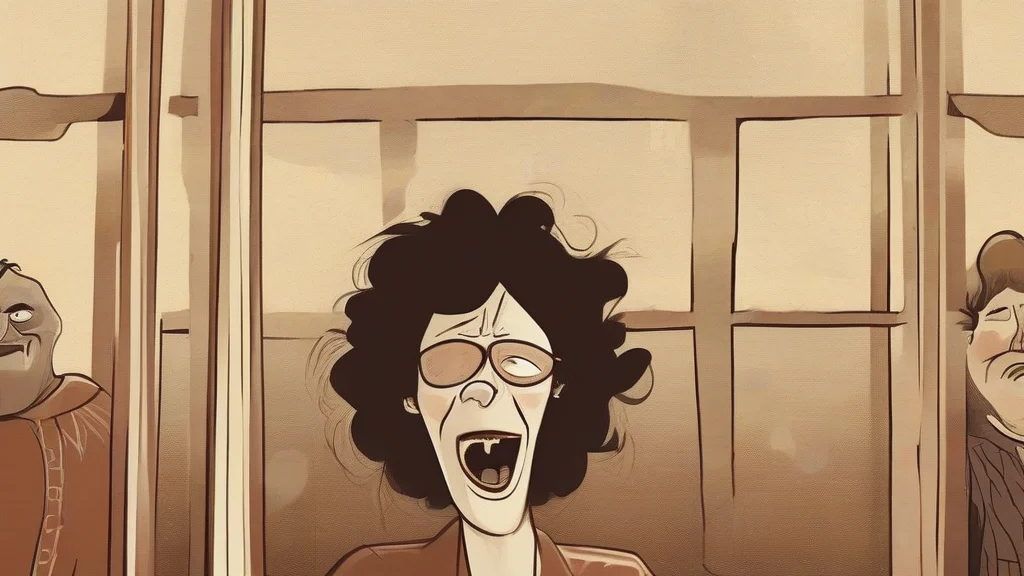
What does jeering mean?
Jeering describes conduct that openly expresses contempt through mockery, laughter, taunts, or insulting remarks. It is especially common when a person or group is being ridiculed by others, as in “a jeering crowd” or “jeering laughter.” As a verb, jeering means to mock or deride someone, often loudly and in a way intended to embarrass or intimidate. The word carries a strongly negative and confrontational connotation, and can imply that the mockery is public and socially humiliating rather than private and restrained. Compared with the broader word mocking, jeering suggests a more conspicuous, vocal, or hostile display of ridicule. It is also related in meaning to sneering, but that word is more often associated with a contemptuous facial expression or tone.
Expressing contemptuous mockery; derisive or taunting.
"He responded with a jeering remark that only deepened the hostility."
Often describes laughter, remarks, voices, or a crowd engaged in open ridicule.
To mock or deride someone, especially loudly or in a deliberately insulting way.
"Several spectators began jeering at the performance."
The verb is often transitive in the form “jeer at someone,” but “jeer” can also be used intransitively.
Jeering turns laughter into a public weapon: a crowd can reshape a moment of defeat into one of humiliation.
Reviewed by Deb Chak, Editor. AI-assisted content curated by RJS Tech Solutions LLP.
Where does jeering come from?
Jeering is the present participle and gerund of the English verb jeer, which means to mock or deride. The underlying verb developed from an older English word with the sense of ridiculing or making fun of someone. The present-participle form with the ending -ing is used both to describe a mocking action and, as an adjective, to characterize remarks, laughter, or people engaged in mockery.
Related word forms
How jeering is actually used
Jeering is generally hostile and contemptuous. It is commonly used for behaviour directed at a person or group and can describe both the remarks themselves and the sound of sustained mockery.
Easily confused with jeering
Jeering often refers to audible mockery or taunting, whereas sneering more specifically describes a contemptuous facial expression or manner.
Mocking is the broader term for ridicule, while jeering suggests a more conspicuous or openly derisive display of contempt.