
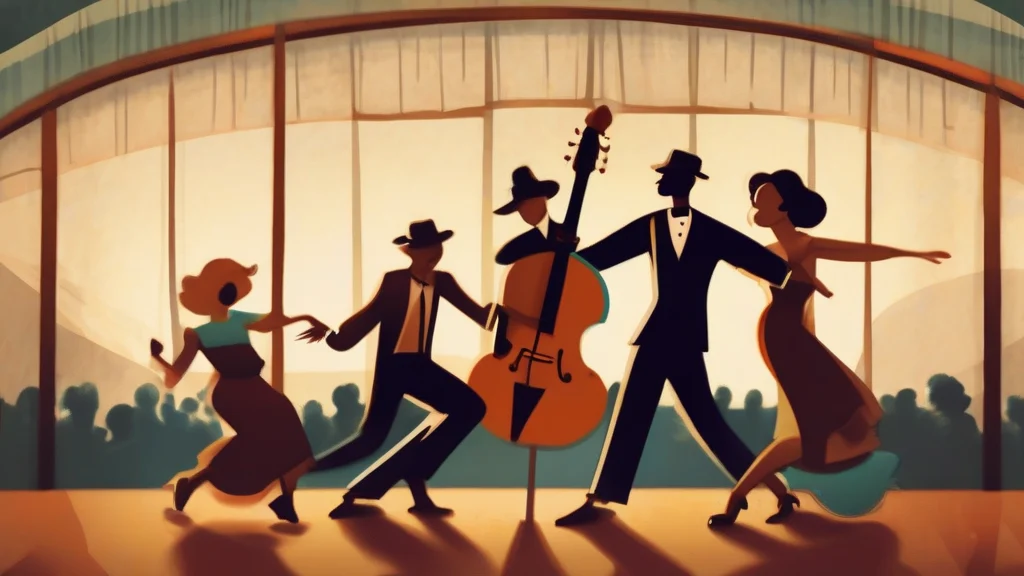
What does jitterbugging mean?
Jitterbugging means dancing the jitterbug, a vigorous and improvisational form of swing dancing associated particularly with jazz music and American dance halls of the 1930s and 1940s. The movement combines rapid footwork, twisting, and the expressive swinging of the arms and torso, making it more energetic and individualistic than many formal ballroom dances. The word is still used for nostalgic references to that period and for contemporary dancing to swing or jazz, although it is not among the most common names for modern partner dancing. Jitterbugging can also describe informal dancing with an enthusiastic or uninhibited quality, especially when the music invites vigorous movement. Its distinctive history makes it more evocative than a general word such as dancing: the expression evokes the exuberance of the swing era without referring merely to nervous trembling.
verb (present participle and gerund)To dance the jitterbug, an energetic swing dance traditionally performed to jazz or swing music.
- To perform the jitterbug, an energetic swing dance usually danced to jazz or swing music.
"They spent the evening jitterbugging to the band's live jazz."
"The couple were jitterbugging in the middle of the floor while the orchestra played."
"Young visitors to the museum began jitterbugging when they heard the 1940s recordings."
The jitterbug swept through 1930s America as dancers threw themselves into the new sounds of jazz and swing.
Reviewed by Deb Chak, Editor. AI-assisted content curated by RJS Tech Solutions LLP.
Where does jitterbugging come from?
The word jitterbug emerged in American English in the early 1930s for an energetic dance performed to swing music. Its name combines jitter, suggesting restless or jerky movement, with bug in the sense of an obsession or craze. The verb developed from the dance noun, with the form jitterbugging denoting the act of performing the dance.
Related word forms
How jitterbugging is actually used
The term is informal and recreational, often carrying a nostalgic connection to swing-era jazz and 1930s–1940s American dance culture.
Easily confused with jitterbugging
Jitterbug is the base verb and the name of the dance, while jitterbugging is its present-participle or gerund form.