
What does jitterbug mean?
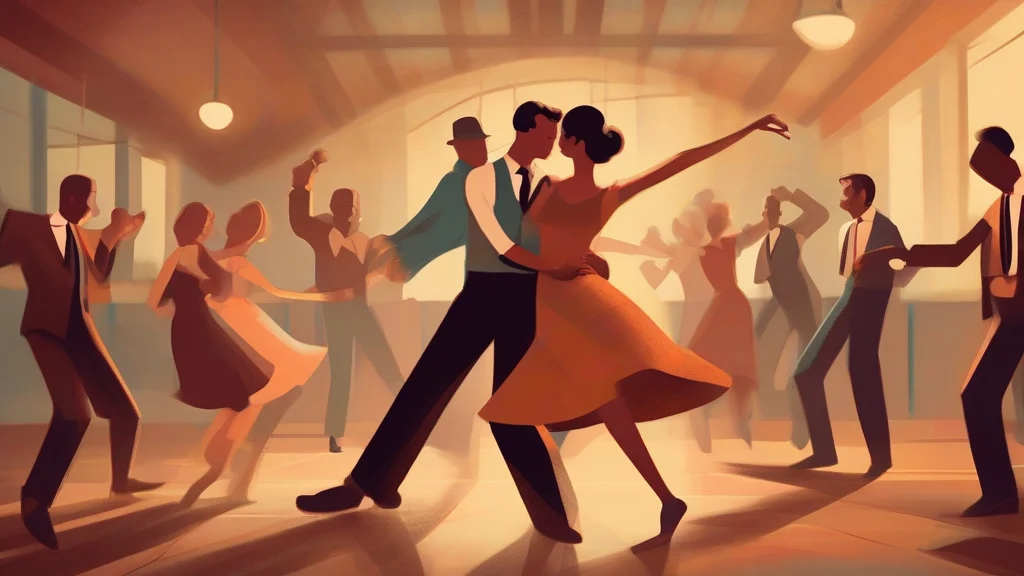
A jitterbug is an energetic swing dance associated especially with American popular culture in the 1930s and 1940s. It features rapid footwork, lively partner movement, and music commonly associated with big bands and the Swing Era. The verb “to jitterbug” means to dance in this style. The word can also denote a person who performs the dance, while an older informal use calls a nervous or restless person a jitterbug. Although its modern use most often recalls vintage dance halls and swing music, jitterbug can still describe vigorous dancing to fast jazz. The term combines “jitter,” suggesting nervous movement or excitement, with “bug,” an informal suffix associated with names for people or things. Its energetic associations have made it a vivid word for both nostalgic dancing and visibly nervous excitement.
A fast, energetic swing dance popular especially in the 1930s and 1940s; also a person who dances it.
"The jitterbug brought couples onto the floor for a wild celebration."
The dance sense is chiefly American. An older informal sense means a nervous or jittery person.
To dance the jitterbug.
"They jitterbugged until the band began its final number."
The verb is usually used with a plural subject or in the progressive forms “jitterbugged” and “jitterbugging.”
The plural is used for people who perform the dance; the dance itself is generally named in the singular.
"The jitterbugs took over the floor as the band launched into a fast blues number."
Before the jitterbug became a global dance craze, its explosive energy captured the nervous intensity of the Swing Era.
Reviewed by Deb Chak, Editor. AI-assisted content curated by RJS Tech Solutions LLP.
Where does jitterbug come from?
Jitterbug was formed in English from “jitter” and the informal suffix “-bug,” a combination associated with the nervous, energetic movement of the dance. The word became established in the United States during the early 1930s, when swing dances were popular. Its connection with the wider family of English words built on “jitter” reflects the dance's fast, agitated-looking energy.
Related word forms
How jitterbug is actually used
As a dance term, jitterbug is chiefly associated with the United States and the Swing Era. The informal sense for a nervous person is dated and much less common than the dance sense.
Easily confused with jitterbug
A jitterbug is a particular fast, energetic swing dance, whereas jive can refer more broadly to a style of swing dance and, idiomatically, to deceptive talk.