
What does ladybug mean?
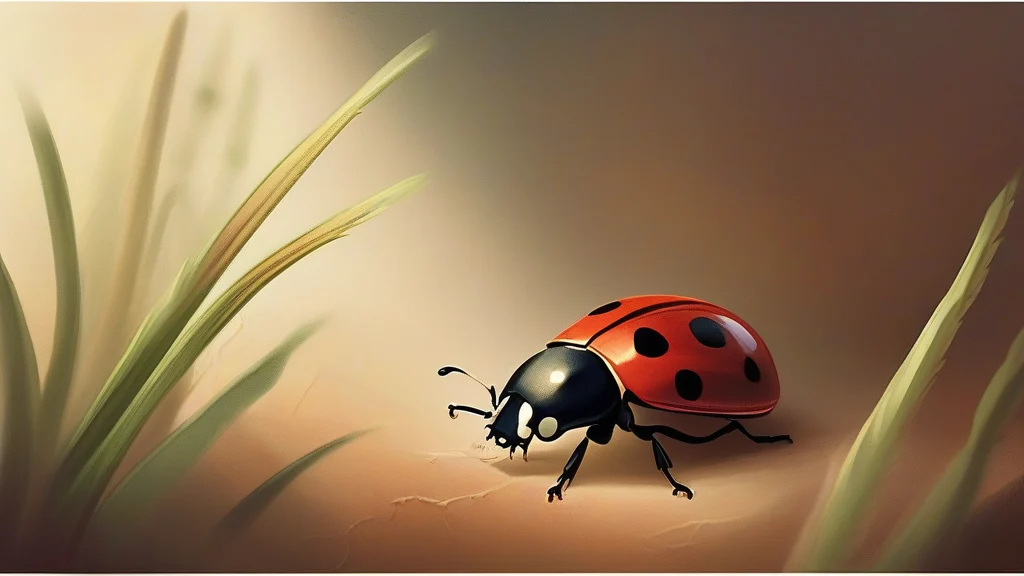
A ladybug is a small beetle, usually recognizable by its red or orange wing cases marked with black spots. The word is everyday and approachable, often suggesting a tiny, harmless, colorful insect. It is particularly associated with gardens, flowers, warm weather, and children observing insects, although the insects also occur in many other habitats. American English normally uses “ladybug,” while British English more commonly uses “ladybird,” although both terms are understood. In formal or scientific writing, “lady beetle” may be used instead. The name combines “lady” with “bug,” an informal word for an insect, and reflects the longstanding British tradition of calling small beetles “ladybirds” and “ladybug beetles.”
nounA small, typically red beetle with black spots, commonly found in gardens and other vegetation. In British English, the more usual term is ladybird; in American English, ladybug is standard.
- A small beetle, usually red with black spots, that is often seen in gardens and on flowers.
"A ladybug landed on the rose bush and then flew away."
"The children carefully moved the ladybug from the leaf to a nearby flower."
"A ladybug flew across the kitchen window while the rain was falling outside."
The regular plural is “ladybugs” in American English; “ladybirds” is the usual plural of the more common British term “ladybird.”
"Several ladybugs were crawling over the leaves."
The name “ladybug” pairs an elegant title with one of the smallest members of the beetle family.
Reviewed by Deb Chak, Editor. AI-assisted content curated by RJS Tech Solutions LLP.
Etymology of ladybug
The name “ladybug” is a modern English compound formed from “lady” and “bug.” The “ladybird” name was established in British English earlier and is also traditionally explained as a reference to the Virgin Mary, whose red-and-gold clothing may have suggested the beetle’s colors. “Ladybug” became especially common in American English in the 20th century, while “ladybird” remains the usual British term.
How ladybug is actually used
The term is informal and everyday rather than technical. In British English, “ladybird” is generally preferred; “ladybug” is especially common in American English and is widely understood in Britain as well.
Easily confused with ladybug
Ladybug and ladybird usually refer to the same insect, but ladybug is the standard term in American English while ladybird is the standard term in British English.