
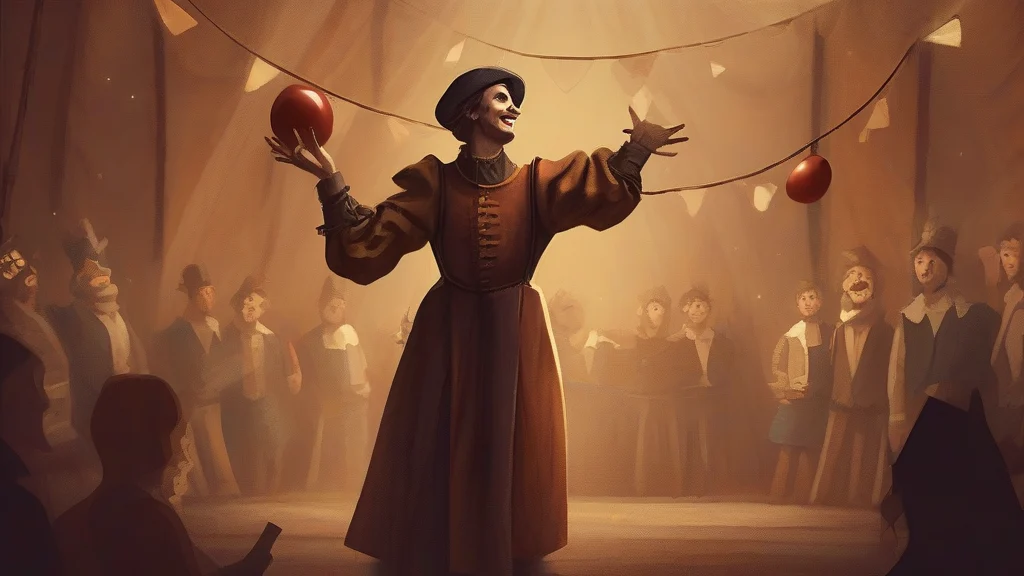
What does jongleur mean?
A jongleur was an itinerant entertainer, especially in medieval Europe, who traveled from place to place performing music, poetry, storytelling, comic routines, and sometimes juggling or other tricks. The word often suggests a performer who worked independently before a fixed theater or court, moving among towns and earning a living through direct audience response. Its modern use is mainly historical and literary, and it can carry a nostalgic or picturesque connotation associated with wandering medieval performers. The related word juggler refers more narrowly to someone who performs tricks and feats of dexterity, while minstrel usually denotes a musician or poet connected with a court, household, or traditional cultural tradition. Although jongleur is sometimes used loosely for a modern performer, its established sense remains the traditional traveling entertainer. The word is useful when a specific historical or cultural reference is intended rather than a generic description of someone who entertains.
nounA medieval itinerant entertainer who performed music, recited poetry or stories, and sometimes performed tricks. The term can also refer more generally to a traditional performer or storyteller.
- A medieval or traditional itinerant entertainer, typically a musician, storyteller, poet, or performer of comic tricks.
"The wandering jongleur entertained the village with songs and comic tales."
"A jongleur arrived at the market with a small drum and an even smaller dog."
"The novel depicts a jongleur whose performances win the trust of a suspicious nobleman."
The standard plural is jongleurs.
"Several jongleurs performed at the festival during the summer."
Before television, comedy clubs, and concert halls, a jongleur carried the show from town to town.
Reviewed by Deb Chak, Editor. AI-assisted content curated by RJS Tech Solutions LLP.
Where does jongleur come from?
Jongleur was borrowed from French jongleur, which derives from Latin joculator, a professional performer or jester. Latin joculator is related to jocus, meaning joke, sport, or amusement. The same ancient root is reflected in English words such as jocular, jocosity, and juggler, linking the modern word to its long history of performance and jesting.
How jongleur is actually used
The word is chiefly literary and historical. It has a nostalgic, romanticized association with medieval traveling performers, but it is not a general synonym for any modern entertainer.
Easily confused with jongleur
A juggler specializes in tricks and feats of dexterity, whereas a jongleur was a medieval traveling performer who might combine music, storytelling, poetry, and juggling.