
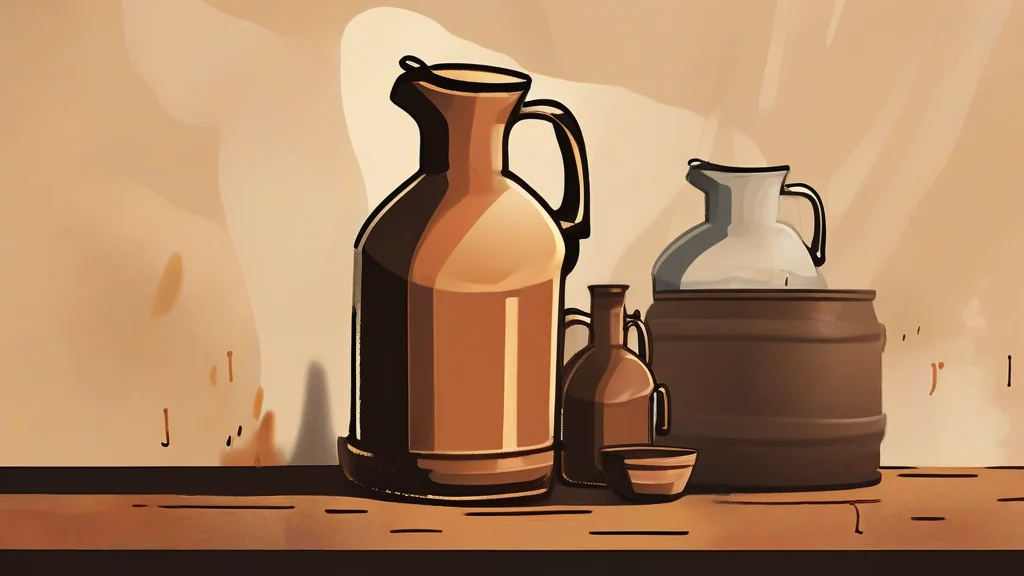
What does jugged mean?
Jugged is an uncommon but expressive word with two related uses. As an adjective, it describes an object whose outline resembles a jug, combining a rounded, capacious body with a narrower opening or neck. The word can suggest either the recognizable form of a traditional jug or a bulging, swelling shape. As the past tense and past participle of the verb jug, it refers to placing or storing something in a container of that kind, such as milk, cream, or another liquid. In literary or descriptive writing, “jugged” can give a sentence a vivid, slightly traditional quality by emphasizing shape and volume. It is not usually used as a synonym for attractive or “good-looking,” despite occasional informal or regional associations in some dictionaries.
Shaped like a jug; having a rounded body and a narrow opening.
"The jugged glass was filled with cold lemonade."
Chiefly descriptive; somewhat old-fashioned or regional in tone.
The past tense and past participle of jug: to place or store something in a jug.
"She jugged the fresh cream before pouring it into the bottle."
This is an inflected form of the verb jug and is normally used with a direct object.
Jugged captures the distinctive shape of a traditional jug: broad and rounded below, then narrowing sharply at the neck.
Reviewed by Deb Chak, Editor. AI-assisted content curated by RJS Tech Solutions LLP.
Where does jugged come from?
The modern form belongs to the English word family of jug, which came through Middle English from an Old French word for a container. The deeper historical origin of that word is not entirely certain, although the root is associated with containers and drinking vessels. Juggle and jugger developed in English from the same broad word family, with juggler meaning a performer who throws and catches objects.
Related word forms
How jugged is actually used
As an adjective, jugged is chiefly descriptive and may sound somewhat old-fashioned or regional, although it is understandable throughout the English-speaking world. As a verb form, it is used in ordinary narrative and technical contexts.
Easily confused with jugged
Jugged ends with the voiced “g” sound, while judged ends with the “j” sound.