
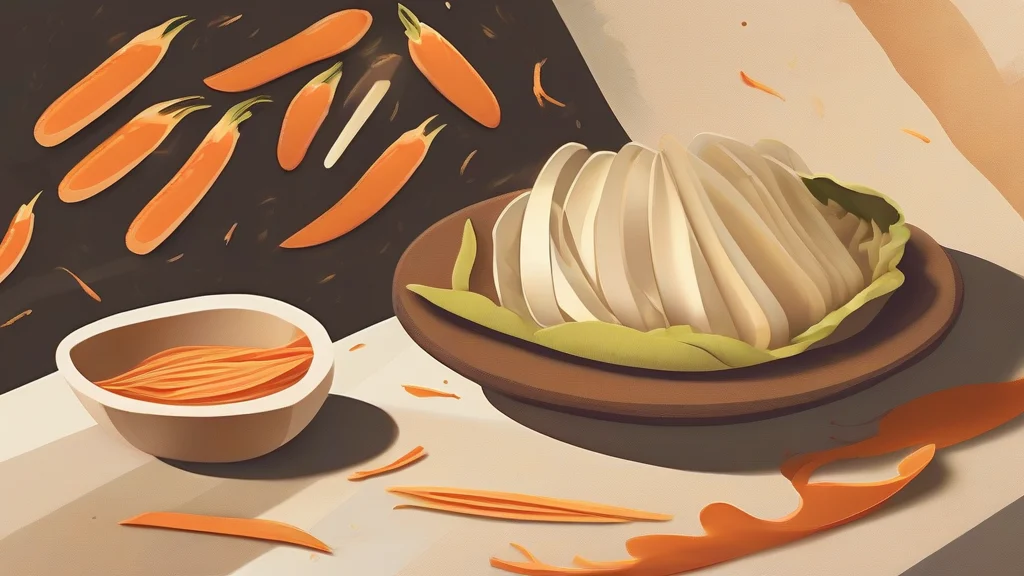
What does julienne mean?
“Julienne” is a word chiefly associated with precise, fine food preparation. As a noun, it means very thin, matchstick-like strips of vegetables or other ingredients, as in “a julienne of carrots.” As an adjective, it describes a julienne cut: a julienne carrot is sliced into long, narrow strips. It can also be used as a verb, meaning to cut food into julienne strips. The term comes from French culinary vocabulary and is now used in British and American kitchens, menus, recipes, and food writing. Although “julienne” also has an older sense referring to a narrow scarf or ribbon, that meaning is largely historical in English. In contemporary usage, the word is valued for its specificity: it identifies not merely thin cuts, but a particularly fine, even style of slicing that adds elegance and texture to a dish.
A style of cutting vegetables or other food into very thin, narrow strips, especially matchstick-like strips; also, the strips themselves or a dish prepared with them.
"The recipe calls for a julienne of bell pepper and courgette."
In culinary use, “a julienne of” commonly refers to the cut strips as a collective noun.
Cut into very thin, narrow strips, especially in a julienne style.
"Add the julienne carrots to the hot oil."
Usually used attributively, as in “julienne vegetables” or “julienne strips.”
To cut food, especially vegetables, into very thin, narrow strips.
"Julienne the leeks and cook them briefly."
This verb is specialized and is most common in culinary writing.
The plural is possible but uncommon; cooks more often use “a julienne of” for the strips collectively.
"The plate was garnished with several juliennes of vegetables."
In a French kitchen, “julienne” is a culinary knife skill: turning vegetables into strips as fine as matchsticks.
Reviewed by Deb Chak, Editor. AI-assisted content curated by RJS Tech Solutions LLP.
Where does julienne come from?
The English word comes from French “julienne,” originally associated with the name Julien and used for a particular way of cutting vegetables into thin strips. The culinary sense developed through French food terminology before entering English. Its older English sense, referring to a narrow scarf or ribbon, is also recorded in the language and is associated with the same French source.
How julienne is actually used
In modern English, “julienne” is primarily a culinary term. It is usually used with “cut” or as a noun for a collection of thin strips; the historical clothing sense is much less common. The word originated in French culinary usage and is widely understood in British and American English.