
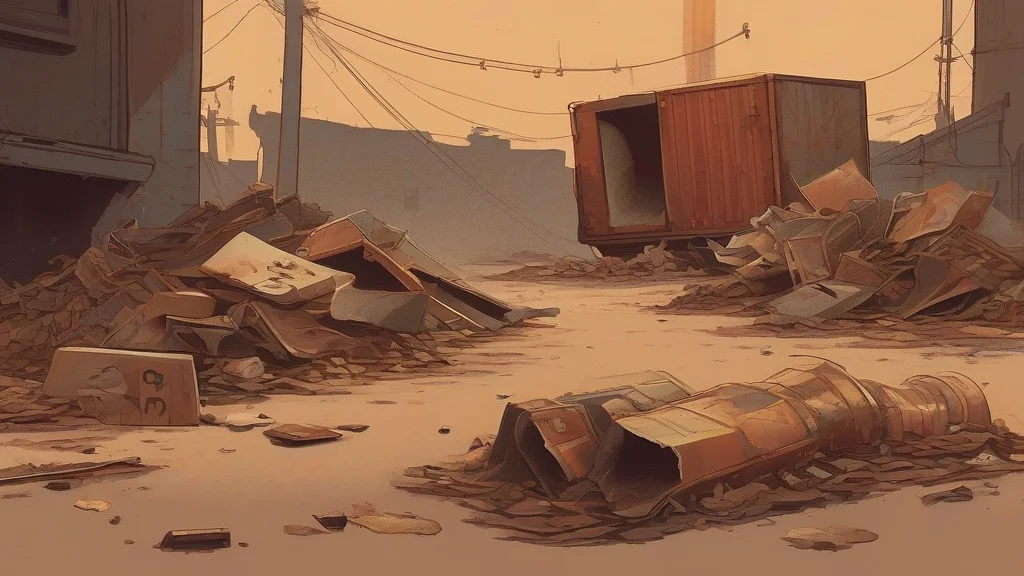
What does junk mean?
Junk is a versatile word for material or objects that are unwanted, discarded, or considered worthless. As a noun, it can refer to rubbish and debris, but in informal contexts it also means low-quality goods, filler, or anything regarded as meaningless or of little value. “Junk mail,” “junk food,” and “junk drawer” are established expressions. The verb “junk,” especially common in informal American English, means to throw something away or regard it as useless. As an adjective, “junk” can describe something shoddy, inappropriate, or not worth keeping. Although often disparaging, the word can be playful, as when someone describes an entertaining but poorly made film as enjoyable “junk.” The term is especially useful for discussing waste, consumer culture, and the contrast between practical value and mere novelty.
Discarded or unwanted objects and materials; things regarded as worthless or of little value.
"They cleared the clutter and carried the junk out to the skip."
The word is common in both formal and informal English; in informal use, it can also mean low-quality goods or trivial entertainment.
To discard something as unwanted, worthless, or of little value.
"The company junked the prototype after the tests showed it was unsafe."
Chiefly informal, especially in American English.
Of low quality, worthless, useless, or unsuitable for a particular purpose.
"We bought a junk telescope at the market, but it was difficult to use."
Informal; it can be playful or dismissive depending on context.
Usually used unchanged in the plural, especially in the sense of discarded material.
"The shop sells old furniture, tools, and other junk."
The word junk originally referred to old rope and pieces of discarded nautical equipment, so its modern sense grew out of the idea of something discarded and fit for nothing.
Reviewed by Deb Chak, Editor. AI-assisted content curated by RJS Tech Solutions LLP.
Where does junk come from?
The word dates to the Middle English period, when “junk” referred to old rope and other discarded nautical equipment. Its precise origin is uncertain, and it may reflect an older maritime borrowing whose source is difficult to identify. Over time, the sense broadened from discarded rope to any discarded or worthless material. Modern derivatives such as “junkie” and “junker” continue this association with waste, addiction, or persons who deal in discarded goods.
Related word forms
How junk is actually used
The noun is common in both formal and informal contexts. The verb and adjective are especially common in informal American English; in British English, “junk” as a verb and adjective is also used but may sound less frequent in some registers.
Easily confused with junk
Junk means discarded or worthless material, whereas junket traditionally means a festive journey or outing and can also mean promotional travel.