
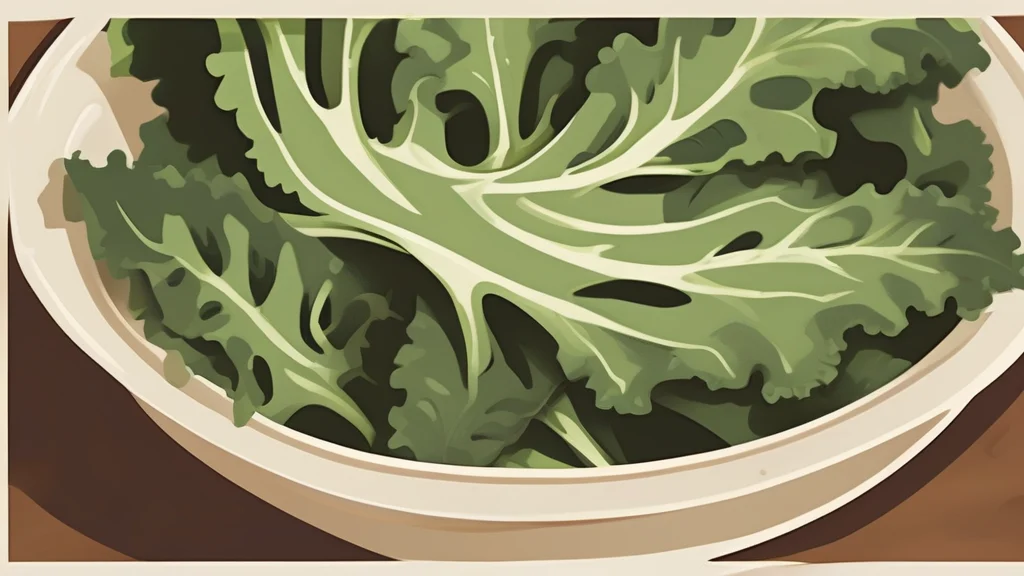
What does kale mean?
Kale is a leafy green vegetable related to cabbage, broccoli, and cauliflower. Its varieties have strongly curled, frilly, or elongated leaves, and its colors range from dark green to purple, blue-green, and reddish. It can be eaten raw in salads, massaged with dressing, or cooked by steaming, boiling, sautéing, roasting, or baking. Kale is often valued for its firm texture and its ability to retain its shape when cooked. In British and American English, the unqualified word most often refers to curly green kale, while names such as Tuscan, red, and lacinato kale identify particular varieties. The term is also used more broadly in recipes and food writing for leafy greens with similarly substantial leaves. Although the vocabulary is international today, its name comes through Scots usage from northern English and ultimately from Old English and Latin roots for cabbage or leafy stalks.
nounA type of cabbage with large, commonly curly or frilly leaves that are eaten cooked or raw. The name is also used for similar leafy varieties, including Tuscan, red, and lacinato kale.
- A leafy green vegetable belonging to the cabbage family, with curly, frilly, or strap-shaped leaves that may be eaten raw or cooked.
- Any of several closely related varieties of this vegetable, distinguished by their leaf shape, color, or texture.
"She roasted chunks of root vegetable with kale, garlic, and lemon."
"Massage the kale with olive oil and a pinch of salt before adding it to the salad."
"This soup combines white beans, tomatoes, and finely shredded kale."
Uncommon. Kale is generally treated as a mass noun; the plural is chiefly used when referring to distinct varieties or individual plants.
"The nursery displayed several kales with dramatically different leaf shapes."
Kale carries the name of the Scots word for cabbage, preserving a northern branch of an English vocabulary that ultimately reaches back to Latin.
Reviewed by Deb Chak, Editor. AI-assisted content curated by RJS Tech Solutions LLP.
Where does kale come from?
The word entered standard English through Scots, where kale was used for cabbage and related leafy plants. Its immediate source is northern English cole, which continues Old English cāl; this ultimately derives from Latin caulis, meaning a stalk, stem, or cabbage. The same Latin root also underlies cognates such as caul and cauliflower and contributed to forms such as cole and colewort.
How kale is actually used
Kale is usually an uncountable noun when referring to the vegetable as food. Countable uses, such as referring to different varieties or individual plants, are less common.