
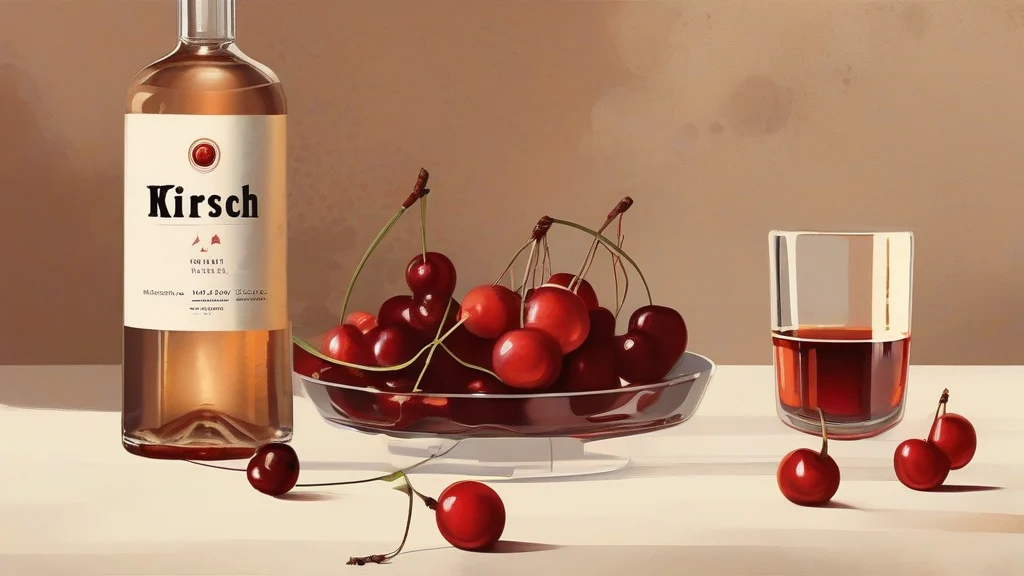
What does kirsch mean?
Kirsch is a clear, colorless brandy made by distilling sour cherries. Its name comes from German, in which Kirsch is the ordinary word for a cherry, while the spirit is commonly called Kirschwasser in German. In English, kirsch can refer to the brandy itself or, more loosely, to a cherry-flavoured spirit or liqueur. It is often served chilled, used in small additions to fruit desserts, or mixed into cocktails and after-dinner drinks. Although cherry brandy is the more readily understood English description, kirsch is the more specific term and carries a strong association with German and Central European traditions. The word is also useful for distinguishing a dry, clear cherry spirit from darker, sweeter cherry liqueurs. In a well-made product, the characteristic flavour is bright, tart, and distinctly cherry rather than heavily sweetened.
nounA clear, colorless brandy distilled from sour cherries. The name is German and is commonly used in English for cherry brandy and for drinks flavored with it.
- A clear brandy distilled from sour cherries.
"She added a splash of kirsch to the dessert."
"The cake was served with ice cream and a little kirsch."
"This German fruit brandy is a fine kirsch."
The word is normally uncountable and has no distinct plural form.
"They brought a bottle of kirsch to dinner."
Kirsch is German for cherry, but in English it names the clear cherry brandy that preserves the fruit's sharp flavor in a drink.
Reviewed by Deb Chak, Editor. AI-assisted content curated by RJS Tech Solutions LLP.
Where does kirsch come from?
The English word kirsch was borrowed from German Kirsche, meaning cherry. German Kirsche derives from earlier forms in the Germanic language family, ultimately from Latin ceresia, a borrowing of Greek kerasos, meaning cherry. Related English forms include cherry and cerise, while the compound cherrystone shares the same fruit-name root. The spirit acquired its name through the German tradition of distinguishing cherry-flavoured distilled drinks from other fruit brandies.
How kirsch is actually used
In English, kirsch is mainly used as the name of the spirit or as a modifier in terms such as kirsch brandy. It is less common than cherry brandy in general reference works but is especially familiar in German-speaking culinary and drinks contexts.
Easily confused with kirsch
Cherry is the fruit itself, whereas kirsch is the spirit made from sour cherries.