
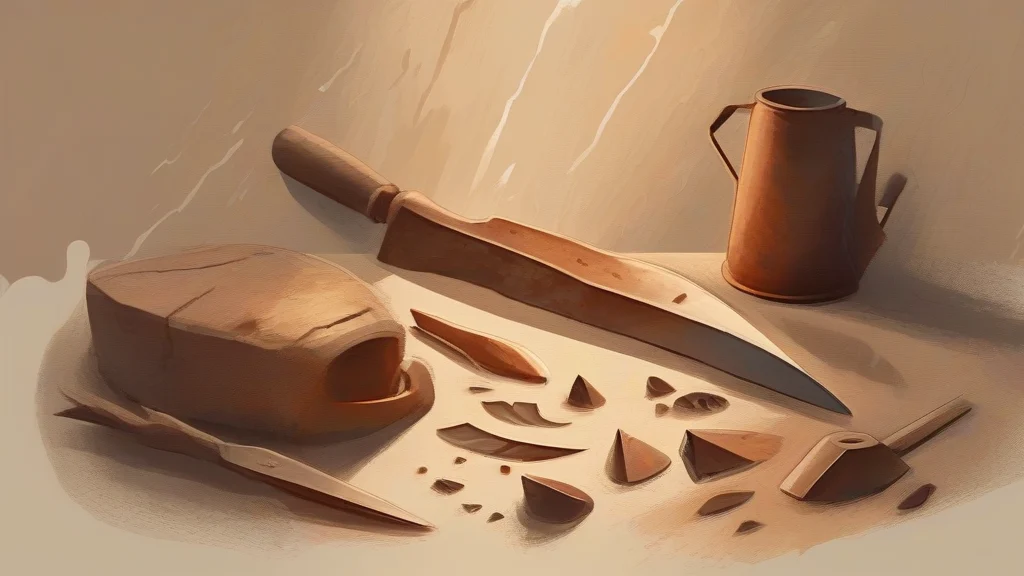
What does knapper mean?
A knapper is a person who practices knapping, the craft of shaping pieces of flint, chert, or similar stone by carefully striking or pressing them. Skilled knappers can produce blades, points, scrapers, and other implements with edges sharp enough to cut flesh, hide, or wood. Historically, such tools were made before metalworking provided alternatives and remained important in some hunting and weapon-making traditions. Today the word is most often encountered in discussions of flintknapping, lithic technology, archaeology, and traditional stone-tool manufacture. Although “knapper” normally denotes a craftsperson, it can also refer more generally to a machine or tool used in knapping. The term is recognized in both British and American English but is specialized rather than common in general conversation. It should not be confused with “knacker,” a word associated particularly with the handling and slaughtering of old or unwanted livestock.
nounA knapper is a person who shapes flint, chert, or similar stone by striking it to produce blades, points, and other implements. The term can also denote a machine or tool used for knapping stone.
- A person who knaps stone, especially flint or chert, into tools or weapons.
- A machine or tool used to shape stone by knapping.
"The flint knapper demonstrated how a skilled craftsperson can turn a small piece of stone into a remarkably sharp blade."
"The flint knapper demonstrated how pressure flaking can produce a blade without using a metal cutting tool."
"Her grandfather was a knapper who made tools from locally gathered flint."
The regular plural is used for multiple craftspersons or, less commonly, multiple knapping machines.
"The exhibition featured tools made by knappers from several different regions."
A skilled knapper can turn a lump of flint into a razor-sharp blade by striking it at carefully controlled angles.
Reviewed by Deb Chak, Editor. AI-assisted content curated by RJS Tech Solutions LLP.
Where does knapper come from?
Knapper was formed from the English verb knap, which developed through Middle English from an inherited Germanic root associated with striking, beating, or breaking something with a blow. In this technical context, knapping refers to shaping stone by controlled blows, especially the production of flint blades and points. Knapper is therefore an agent noun denoting the person who performs that craft, while related forms include knap, knack, knapsack, and knapping.
How knapper is actually used
The word is chiefly occupational and technical, with neutral connotations, although it may sound traditional or historical when describing an individual craftsperson. The sense referring to a machine is uncommon in everyday speech but established in specialist contexts.
Easily confused with knapper
A knapper shapes stone tools, whereas a knacker deals with or slaughters livestock, especially old or diseased animals.