
What does knapping mean?
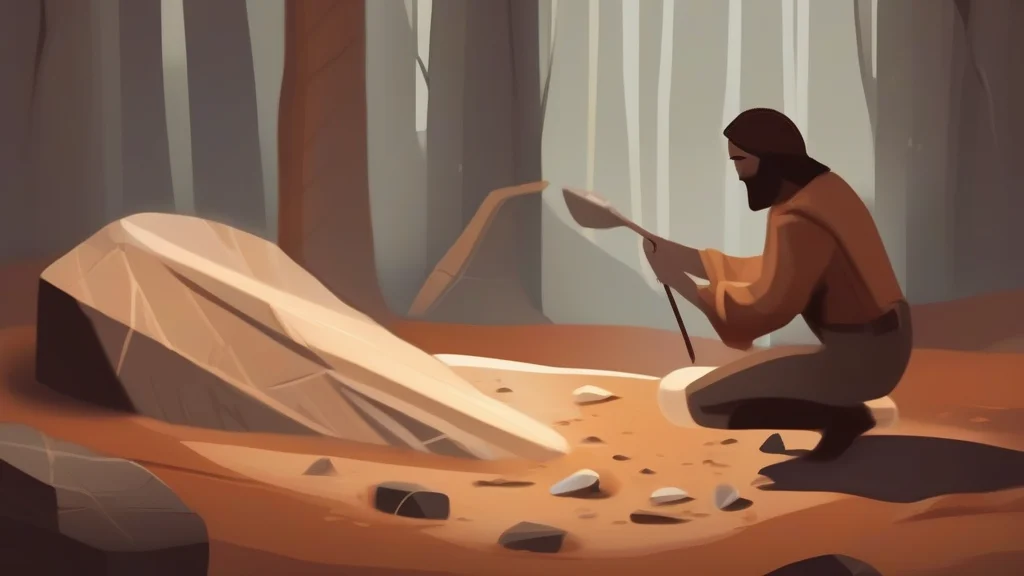
Knapping is the technique of shaping stone into useful or decorative forms by carefully breaking off pieces with another stone or a specialized tool. The process is most closely associated with flint, which can be fractured into sharp flakes and then shaped into points, scrapers, blades, and other implements. Knapping may involve direct percussion, in which a hard object strikes the stone, or pressure flaking, in which pressure is applied to detach small flakes with greater control. The word is especially common in archaeology and lithic technology, where patterns of flakes and scars help researchers identify how tools were made and used. It is also used in contemporary craft and educational settings. Knapping is a precise, specialized term that conveys both the physical action and the controlled craftsmanship involved in working stone.
verbKnapping is the process of shaping stone, especially flint, by striking or pressure-flaking it to create points, blades, or other tools.
- The action or process of shaping stone by striking or pressure-flaking it, especially to make a point, blade, or implement.
"The archaeologist carefully examined the flint tools and fragments found near the abandoned camp."
"She learned flint knapping from an experienced craftsperson."
"Microscopic analysis revealed that the blade had been knapped from high-quality flint."
Long before metal tools, a harder stone could shape a softer one: flint knapping produced some of humanity’s earliest tools.
Reviewed by Deb Chak, Editor. AI-assisted content curated by RJS Tech Solutions LLP.
Where does knapping come from?
The underlying word “knap” comes from Middle English and ultimately from an Old English verb meaning to strike or break with a blow. Its cognates include forms in several Germanic languages connected with striking, breaking, or cracking. The modern craft term also connects etymologically with “knapsack,” which developed through Dutch from a related verb associated with breaking or fastening together.
Related word forms
How knapping is actually used
The term is used especially in archaeology, lithic studies, and the modern craft of making stone tools. It can describe percussion methods as well as pressure flaking, in which force is applied gradually to detach small flakes.