
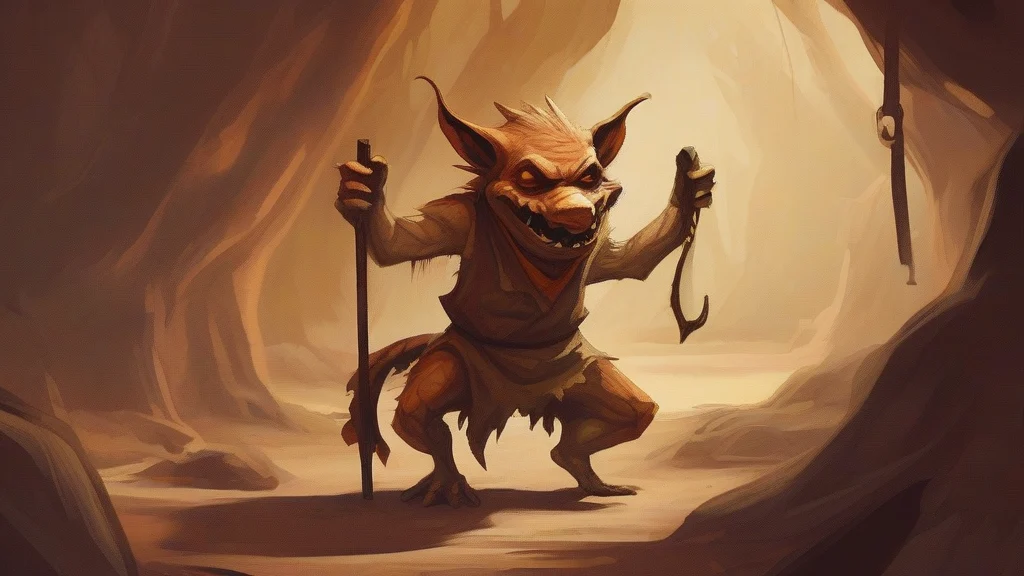
What does kobold mean?
A kobold is a small spirit from German folklore, usually depicted as a mischievous, wiry creature resembling a goblin. Kobolds may haunt houses, workshops, or mines, where they can perform small chores, conceal objects, or create minor difficulties. Their behaviour is often ambiguous rather than openly malicious: a kobold may be troublesome to someone it dislikes while helping a favoured family or craftsman. The word is now used chiefly when discussing Germanic folklore, fantasy literature, and fantasy games, although it also survives in the name cobalt. That name arose because early miners attributed their difficulties with cobalt ore to hostile spirits; the ore seemed to frustrate extraction and could release poisonous arsenic fumes. Consequently, kobold carries a distinctive mixture of folklore, domestic familiarity, and mining history. It is especially useful for readers seeking a more specific term than goblin when describing a small, traditionally Germanic spirit.
nounA small goblin-like spirit from German folklore, often associated with households, mines, and acts of harmless or troublesome mischief.
- A goblin-like creature in German folklore.
- A small household or mine-associated spirit, often mischievous and sometimes helpful.
"The kobold left a neat stack of copper coins beside the sleeping miner."
"According to the legend, a kobold guided the miner toward a hidden seam of silver."
"She dismissed the sounds in the old farmhouse as the work of a playful kobold."
The regular plural is used when referring to more than one kobold.
"The old tales speak of kobolds who steal milk and leave the household in disarray."
Cobalt takes its name from kobolds: miners who struggled to extract the troublesome metal blamed mischievous underground spirits.
Reviewed by Deb Chak, Editor. AI-assisted content curated by RJS Tech Solutions LLP.
Where does kobold come from?
The English word borrowed the German Kobold, a form also recorded in Middle High German as kobolt. In German folklore, kobolds became particularly associated with mines and households, including the metal now called cobalt. Cobalt is an old borrowing of German Kobalt, an older spelling of Kobold, reflecting miners' belief that troublesome underground spirits obstructed their work.
How kobold is actually used
In modern English, kobold is chiefly encountered in discussions of folklore and fantasy. It is not generally part of everyday British or American vocabulary.