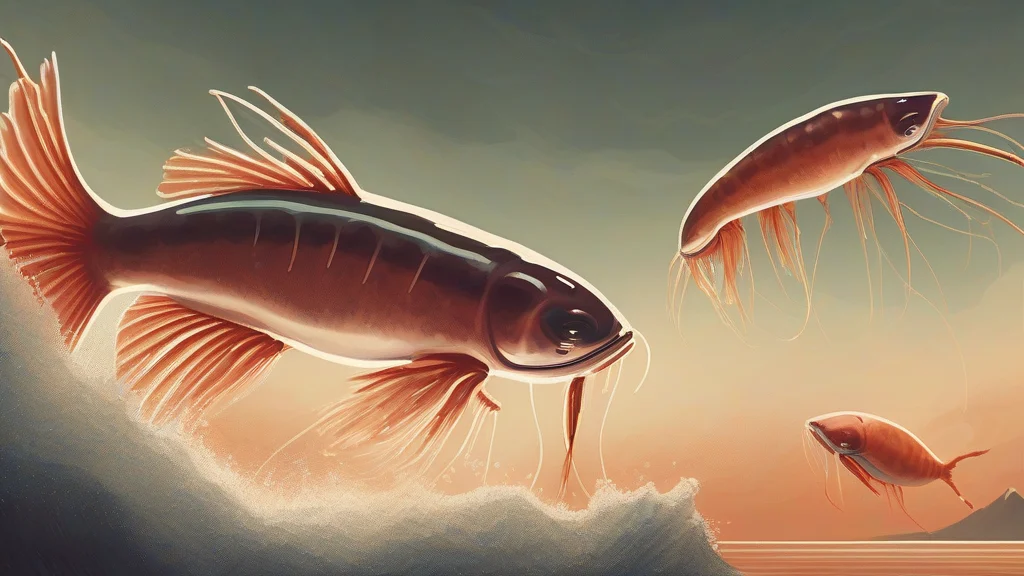
What does krill mean?
Krill are small, usually transparent or translucent, shrimp-like crustaceans that play a vital role in the marine food chain. They are a primary food source for many large marine animals, including whales, seals, and penguins. Krill are typically found in large swarms in ocean waters, particularly in polar regions. The term krill is often used in scientific and ecological contexts to refer to these small crustaceans. Krill populations can be an indicator of the health of marine ecosystems, and changes in their populations can have significant impacts on the entire food chain. Understanding krill is essential for managing marine ecosystems and conserving marine biodiversity.
nounKrill refers to small, usually transparent or translucent, shrimp-like crustaceans that are an essential food source for many marine animals, including whales, seals, and penguins. They are typically found in large swarms in ocean waters.
- Small, shrimp-like crustaceans
- Food source for marine animals
"The blue whale's diet consists mainly of krill, which it filters through its baleen plates."
"Krill are a crucial component of the marine food chain."
"The krill population in the Antarctic waters has been declining due to climate change."
Krill is a mass noun and does not have a standard plural form. It can be used in both singular and plural contexts without changing its form.
Reviewed by Deb Chak, Editor. AI-assisted content curated by RJS Tech Solutions LLP.
Etymology of krill
The word krill originated from the Norwegian word 'krill', which means 'small, young fish' or 'fry'. However, in the context of marine biology, krill refers specifically to small, shrimp-like crustaceans, not fish. The term has been adopted into English and is widely used in scientific and ecological contexts.
How krill is actually used
Krill is often used in scientific and ecological contexts to refer to these small crustaceans, but it can also be used more broadly in discussions about marine life and ecosystems.