
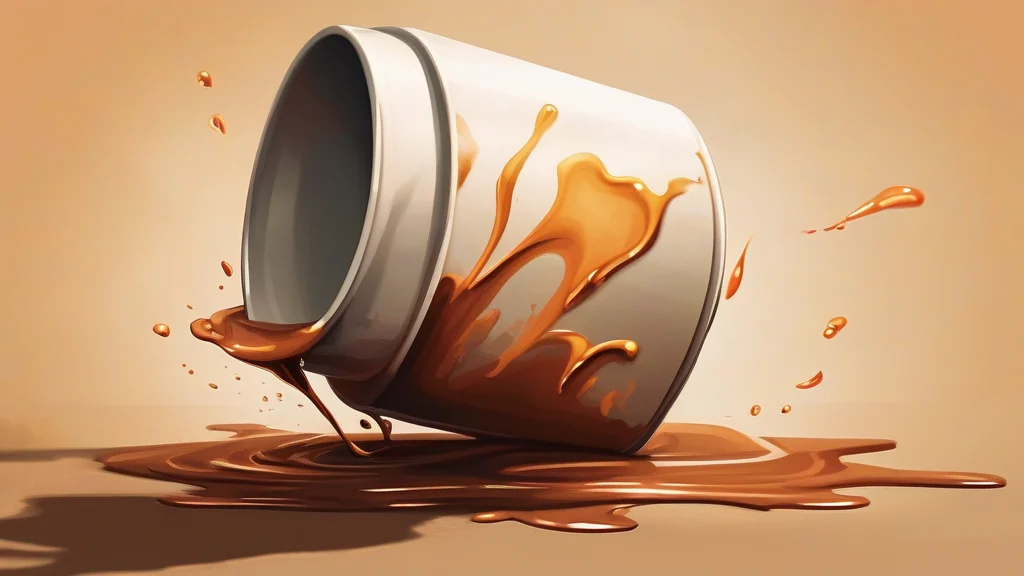
What does spill mean?
Spill most commonly describes the accidental or uncontrolled release of liquid, gas, or loose material from a container. The verb can be followed by a direct object, as in “spill the milk,” or used intransitively to describe what escapes: “The coffee spilled across the floor.” Its figurative meanings include spreading beyond an intended limit, as in a policy “spilling over” into other areas, and disclosing information, often in an informal or accidental sense. As a noun, a spill is an individual release of a substance or, more generally, an incident involving such a release. Spill is useful because it covers both ordinary household mishaps and the movement of substances, consequences, or information beyond their expected boundaries. It is heard throughout British and American English, with no major regional difference in its central meanings.
A discharge or scattering of liquid, gas, loose material, or information. It may also refer to the incident or the amount involved in such a release.
"The cleanup crews arrived after several spills."
The noun is neutral in register and is commonly used in environmental, industrial, and domestic descriptions.
To cause liquid, gas, or loose contents to escape from a container, or to scatter or spread beyond a boundary. It can also mean to disclose information.
"The campaign spilled into a wider debate about privacy."
The information sense is generally informal and often suggests an accidental or unsolicited revelation.
The plural is commonly used for separate incidents or releases, especially oil spills, chemical spills, and other environmental events.
"Several spills were reported along the coast."
A spill can be a puddle on the floor—or, figuratively, a confession: to spill the beans is to let a secret escape.
Reviewed by Deb Chak, Editor. AI-assisted content curated by RJS Tech Solutions LLP.
Where does spill come from?
Spill descends from Old English spillan, a Germanic verb associated with causing contents to be lost, scattered, or wasted. It has close relatives in other Germanic languages, including German and Dutch spillen and Swedish spilla, which likewise refer to spilling or pouring out. The noun developed from the verb’s action and came to denote an individual discharge or the material released during one. The verb’s modern figurative senses developed from the general idea of letting something escape or spread beyond its proper limits.
Related word forms
How spill is actually used
The concrete sense is neutral and commonly describes an accidental release of liquid or material. The information sense is informal and often implies an unintentional or unsolicited disclosure, while the verb can also have a more formal tone in technical contexts involving spills, emissions, or data.
Easily confused with spill
To spill is to release or scatter contents, whereas to spoil is to damage, ruin, or diminish the value of something.